Comparison · Updated October 2026
Jupiter vs Saturn.
Jupiter and Saturn are the two gas giants of the solar system, similar in composition and structure but different in mass, moons, and rings. Both rotate faster than any rocky planet and both have powerful magnetic fields, but the differences are bigger than the textbook similarities suggest.
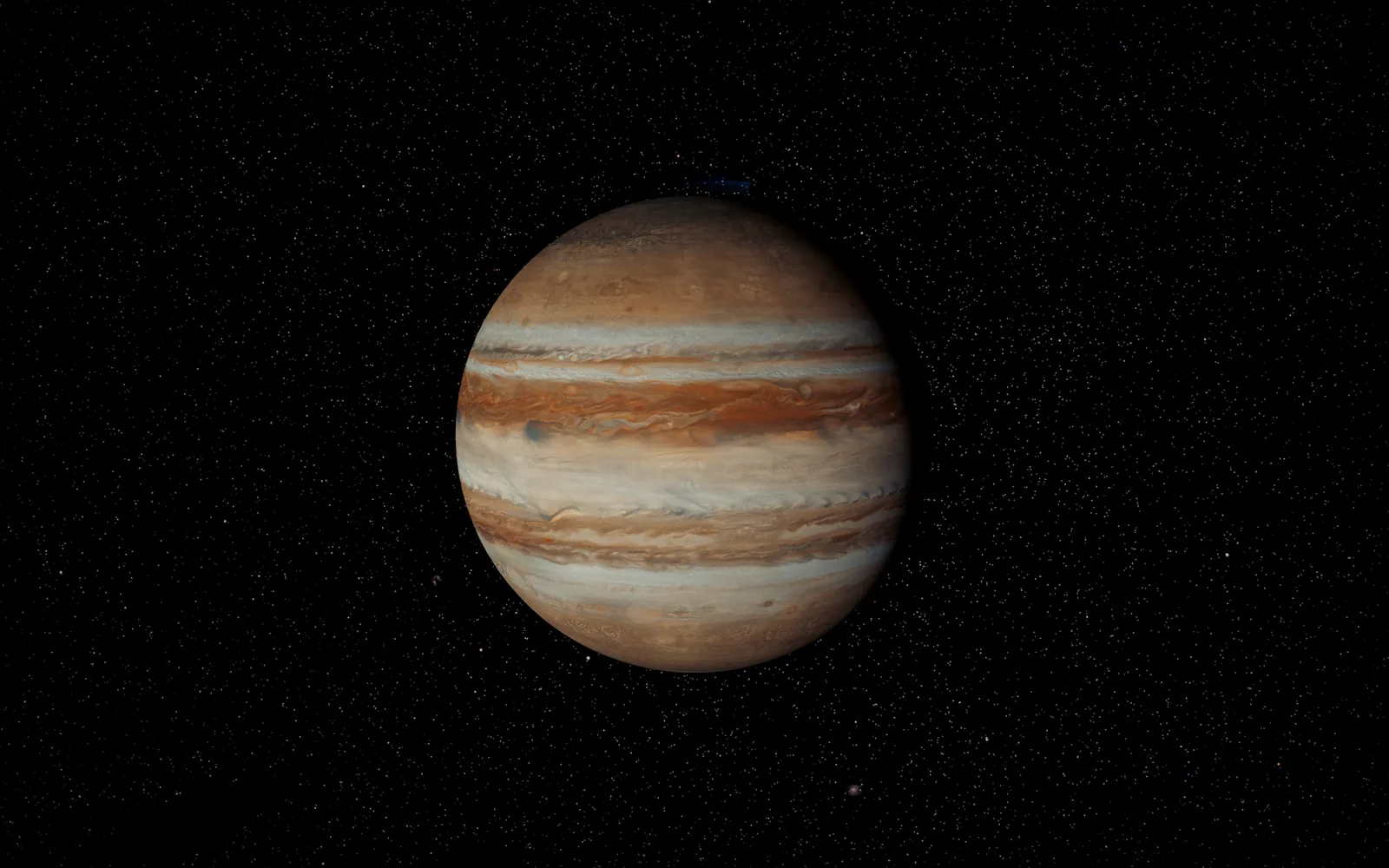
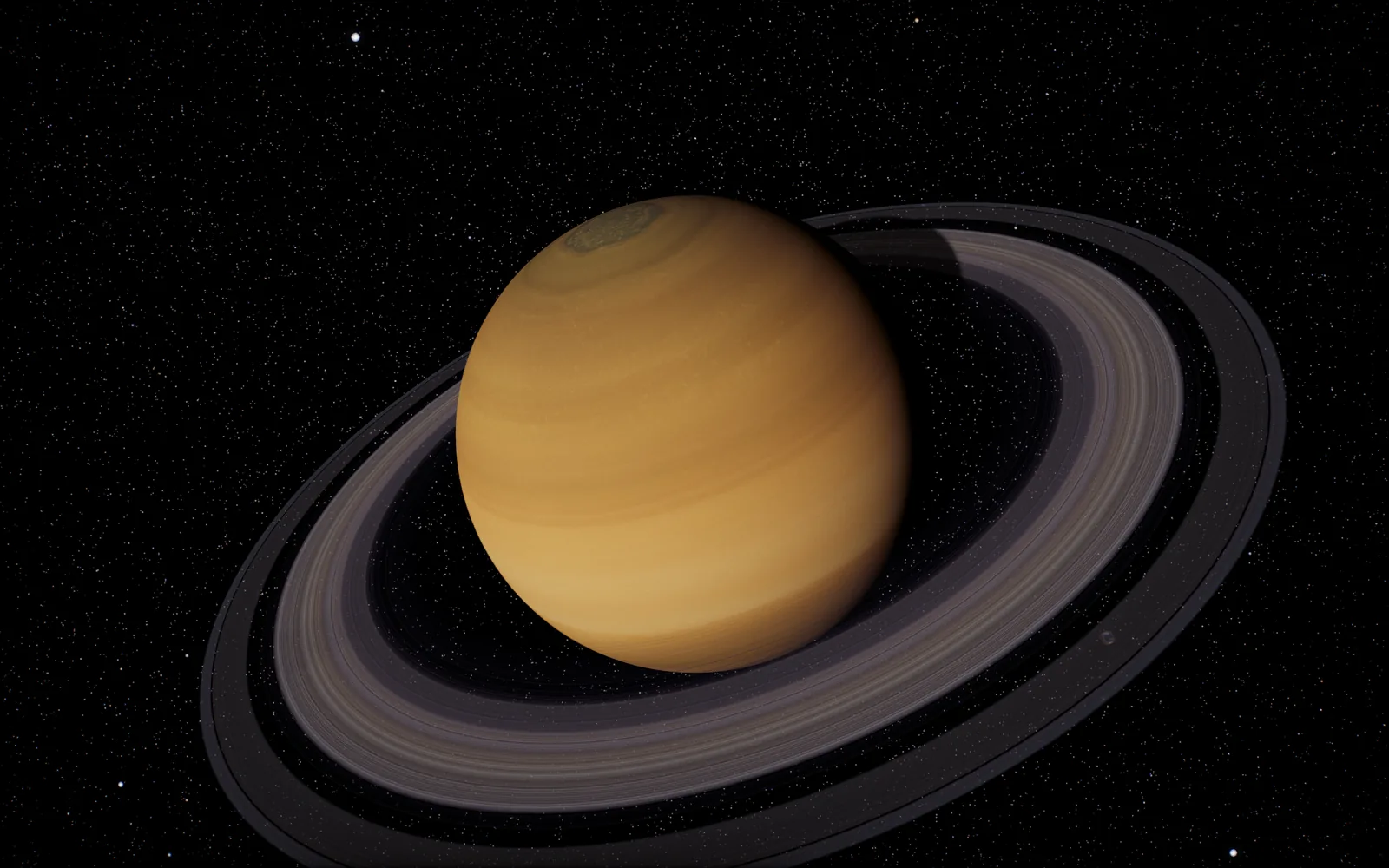
Side by side
| Property | Jupiter | Saturn | Difference |
|---|---|---|---|
| Type | Gas Giant | Gas Giant | Same kind |
| Diameter | 139,820 km | 116,460 km | Jupiter is 1.2× wider |
| Distance from Sun | 778.5M km | 1.43B km | Saturn is 1.8× farther out |
| Orbital period | 11.86 years | 29.46 years | Saturn's year is 2.5× longer |
| Number of moons | 101 | 285 | Saturn has 184 more |
| Axial tilt | 3.13° | 26.73° | Saturn by 24° |
To scale
About Jupiter
Jupiter is the largest planet in the solar system — a gas giant with more than twice the mass of all the other planets combined and a diameter of 139,820 km. Its banded cloud structure rotates faster than any other planet (one rotation every 9h 56m), driving the jet streams that produce the bands and the centuries-old storm called the Great Red Spot. Jupiter has 101 confirmed moons as of March 2026, including the four Galilean satellites visible in any small telescope.
About Saturn
Saturn is the sixth planet from the Sun and the second-largest in the solar system, a gas giant best known for its bright ring system. Its 116,460 km diameter is nine times Earth's, but its average density is so low (0.69 g/cm³) that it would float in water. Saturn has 285 confirmed moons as of March 2026, the most of any planet, including Titan, the only moon with a substantial atmosphere, and Enceladus, which sprays water from a global subsurface ocean.
See them side by side in 3D
Open the 3D viewer to fly between Jupiter and Saturn at any time speed and scale. The viewer renders both bodies with realistic textures, lighting, and orbital motion in real time.