Comparison · Updated October 2026
Mars vs Earth.
Earth and Mars are often compared because they are the two outermost terrestrial planets in our system, similar in axial tilt and rotation period, and close enough to swap material via meteorite exchange. They diverge sharply in mass, atmosphere, and habitability. Here is the head-to-head.
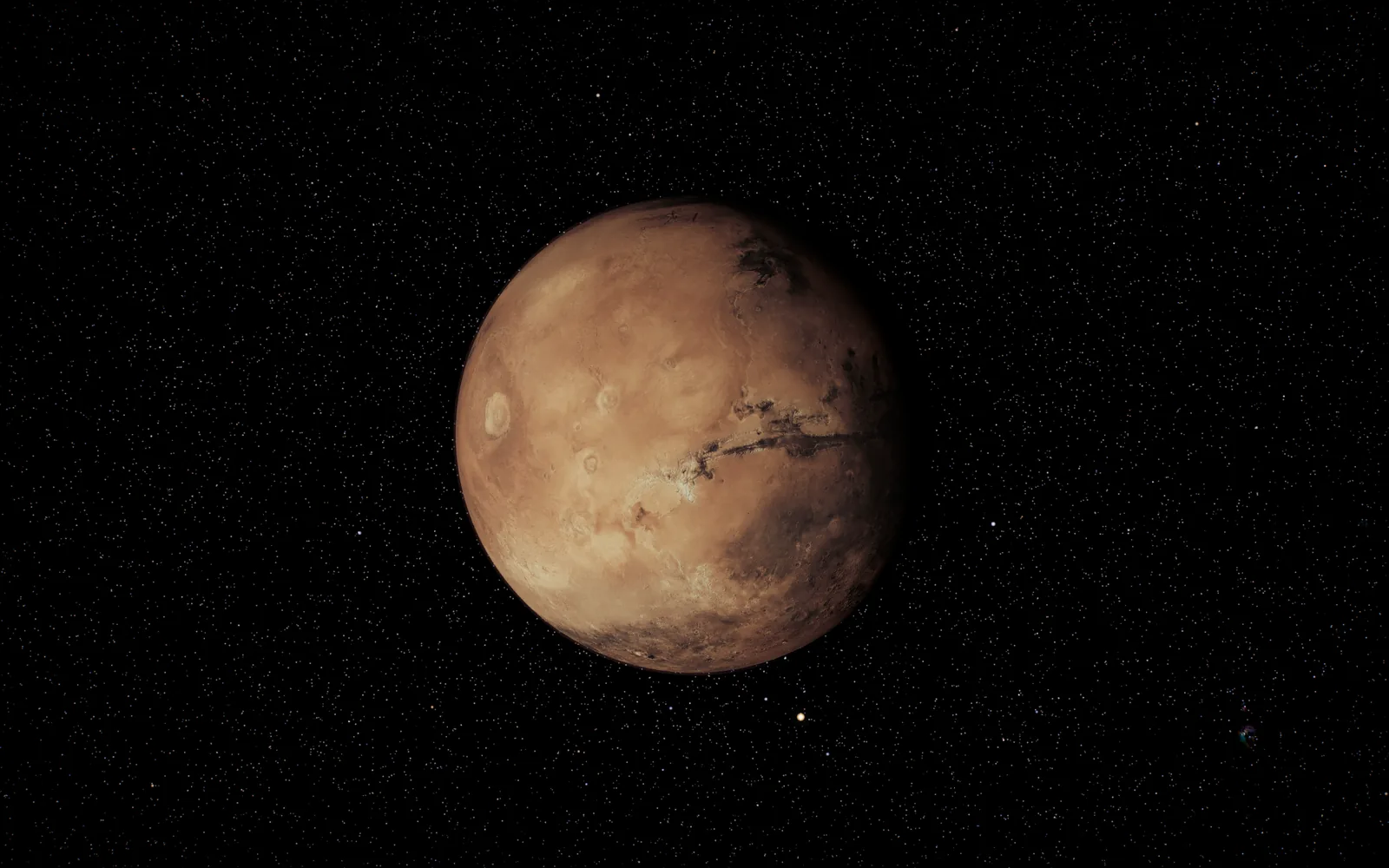
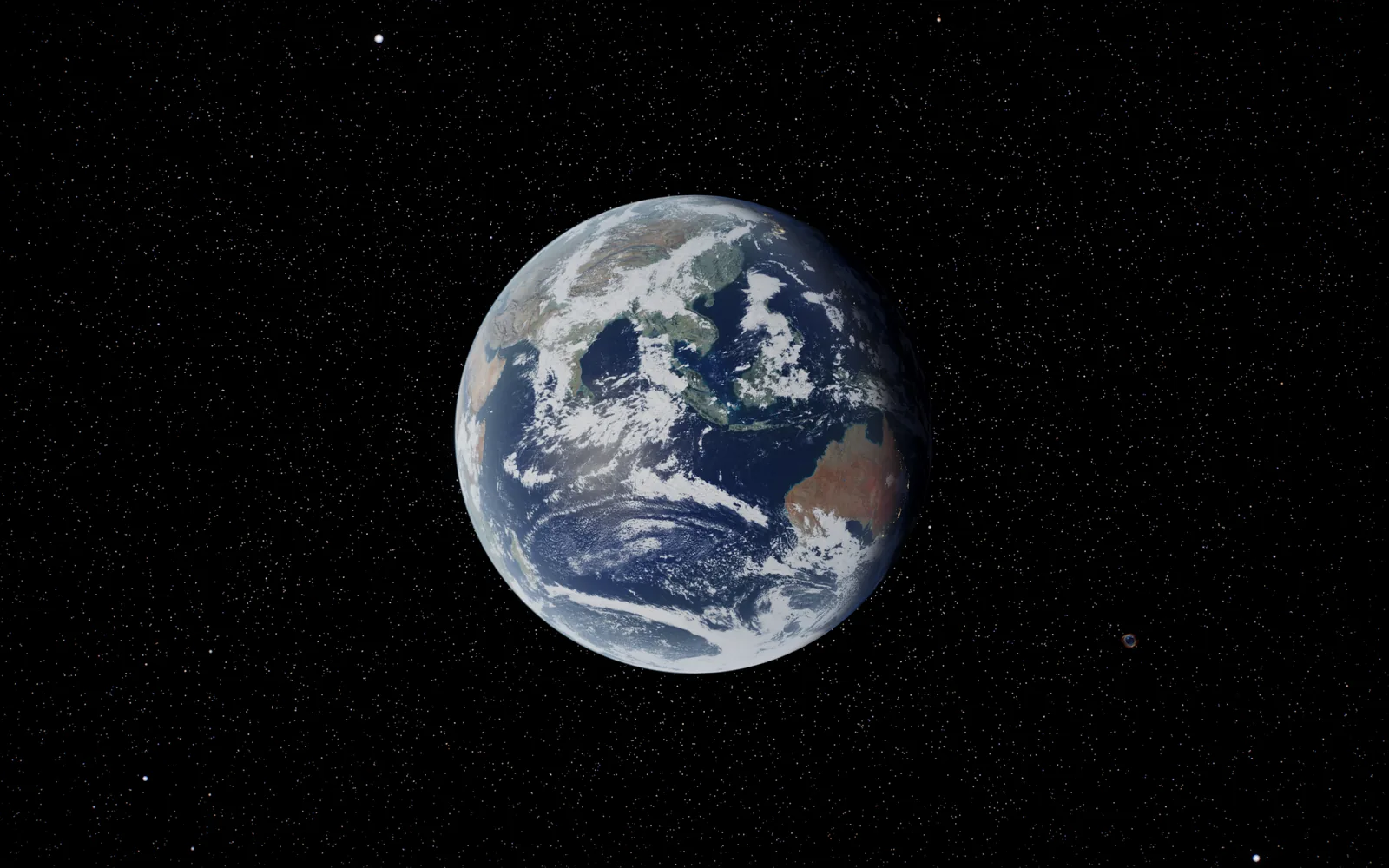
Side by side
| Property | Mars | Earth | Difference |
|---|---|---|---|
| Type | Terrestrial Planet | Terrestrial Planet | Same kind |
| Diameter | 6,779 km | 12,742 km | Earth is 1.9× wider |
| Distance from Sun | 227.9M km | 149.6M km | Mars is 1.5× farther out |
| Orbital period | 687 days | 365.25 days | Mars's year is 1.9× longer |
| Number of moons | 2 | 1 | Mars has 1 more |
| Axial tilt | 25.19° | 23.44° | Mars by 1.8° |
To scale
About Mars
Mars is the fourth planet from the Sun, the Red Planet, with a thin CO₂ atmosphere and an iron-oxide-rich surface that gives it its colour. Its diameter of 6,779 km is roughly half Earth's. A Martian day (24h 37m) is almost the same as Earth's, but a year takes 687 Earth days. Mars hosts Olympus Mons, the tallest volcano in the solar system at 22 km, and Valles Marineris, a canyon system 4,000 km long.
About Earth
Earth is the third planet from the Sun, the only known world with life, and the densest planet in the solar system. Its 12,742 km diameter is the largest among the rocky inner planets. Roughly 71% of the surface is liquid water — a state stable only because Earth sits inside the Sun's habitable zone, has a thick enough atmosphere to maintain pressure, and a magnetic field strong enough to deflect the solar wind.
See them side by side in 3D
Open the 3D viewer to fly between Mars and Earth at any time speed and scale. The viewer renders both bodies with realistic textures, lighting, and orbital motion in real time.