Comparison · Updated October 2026
Mars vs Venus.
Mars and Venus bracket Earth on either side, both in the inner solar system, both broadly similar in starting conditions four billion years ago. Today one is frozen and dry, the other is hellishly hot and crushing. Here is the comparison.
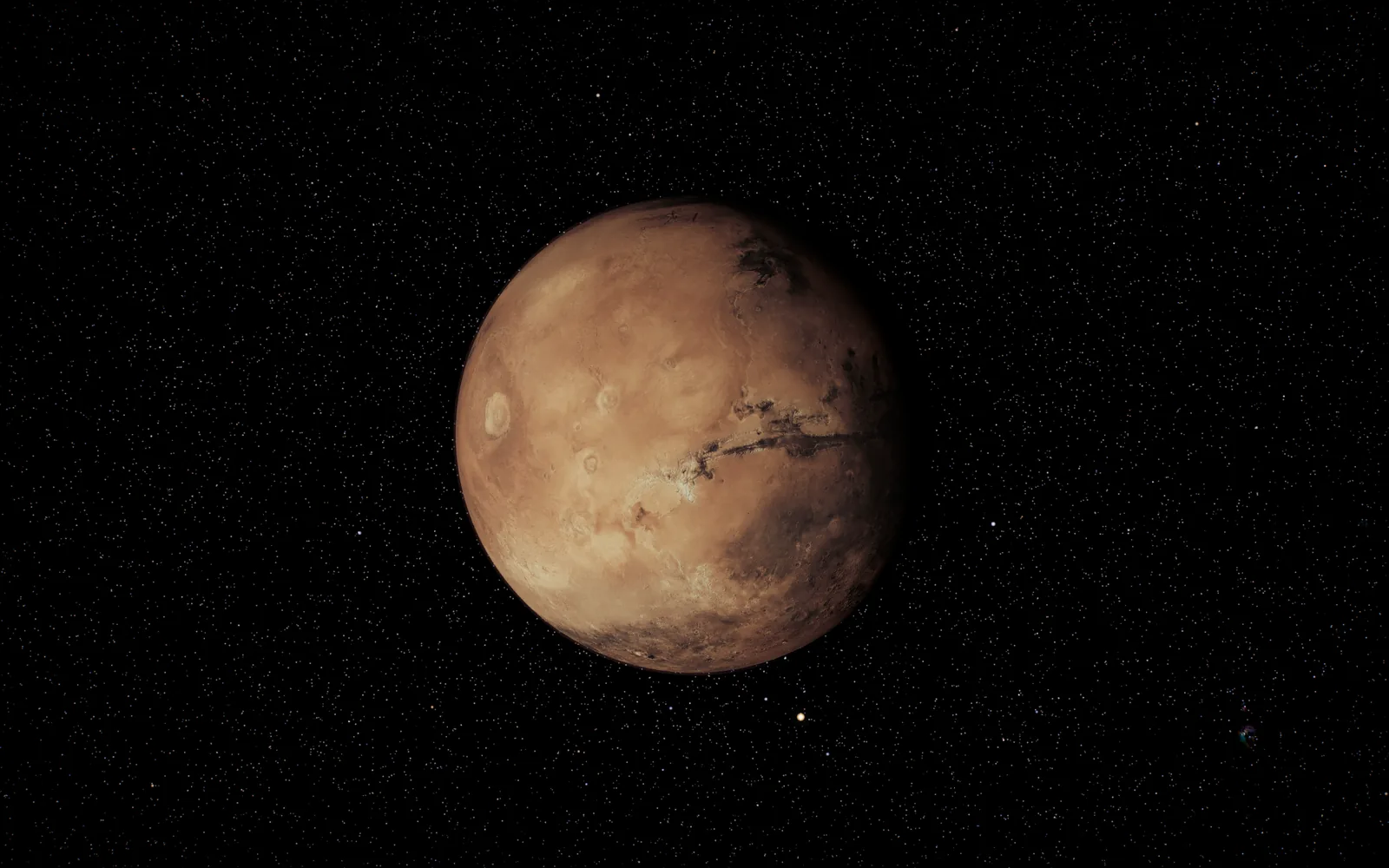
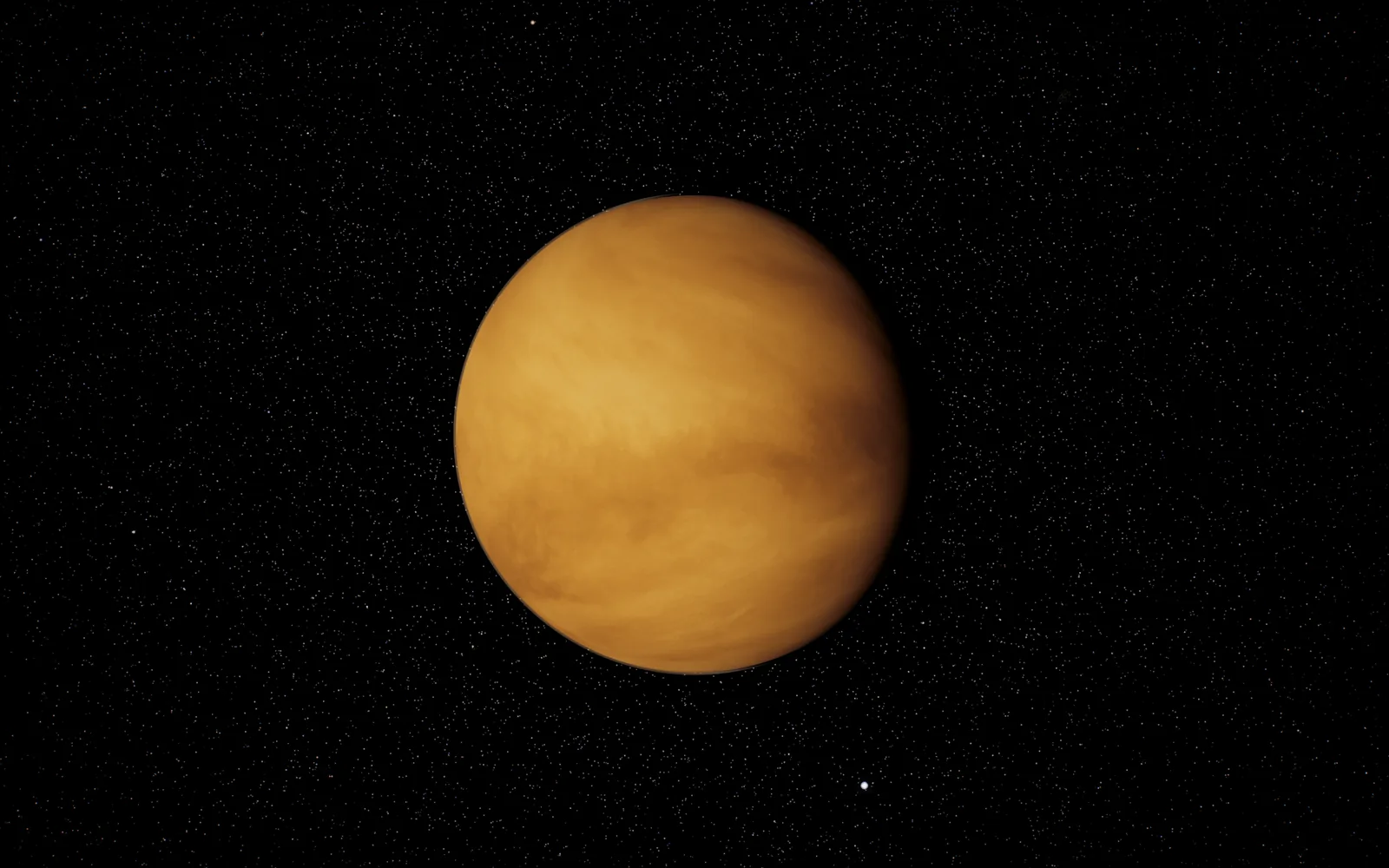
Side by side
| Property | Mars | Venus | Difference |
|---|---|---|---|
| Type | Terrestrial Planet | Terrestrial Planet | Same kind |
| Diameter | 6,779 km | 12,104 km | Venus is 1.8× wider |
| Distance from Sun | 227.9M km | 108.2M km | Mars is 2.1× farther out |
| Orbital period | 687 days | 225 days | Mars's year is 3.1× longer |
| Number of moons | 2 | 0 | Only Mars has moons |
| Axial tilt | 25.19° | 177.4° | Venus by 152° |
To scale
About Mars
Mars is the fourth planet from the Sun, the Red Planet, with a thin CO₂ atmosphere and an iron-oxide-rich surface that gives it its colour. Its diameter of 6,779 km is roughly half Earth's. A Martian day (24h 37m) is almost the same as Earth's, but a year takes 687 Earth days. Mars hosts Olympus Mons, the tallest volcano in the solar system at 22 km, and Valles Marineris, a canyon system 4,000 km long.
About Venus
Venus is the second planet from the Sun and the hottest world in the solar system, with a surface temperature of about 465 °C — hot enough to melt lead. A dense CO₂ atmosphere 92 times the surface pressure of Earth's drives a runaway greenhouse effect, while sulfuric-acid clouds blanket the planet. It also rotates backwards: a Venusian day is longer than its 225-day year.
See them side by side in 3D
Open the 3D viewer to fly between Mars and Venus at any time speed and scale. The viewer renders both bodies with realistic textures, lighting, and orbital motion in real time.