Comparison · Updated October 2026
Mercury vs Pluto.
Mercury is the smallest planet in the solar system. Pluto is the largest dwarf planet. Both are small, both are cold (Pluto everywhere, Mercury at night), and both have surprised astronomers in different ways. Here is the side-by-side.
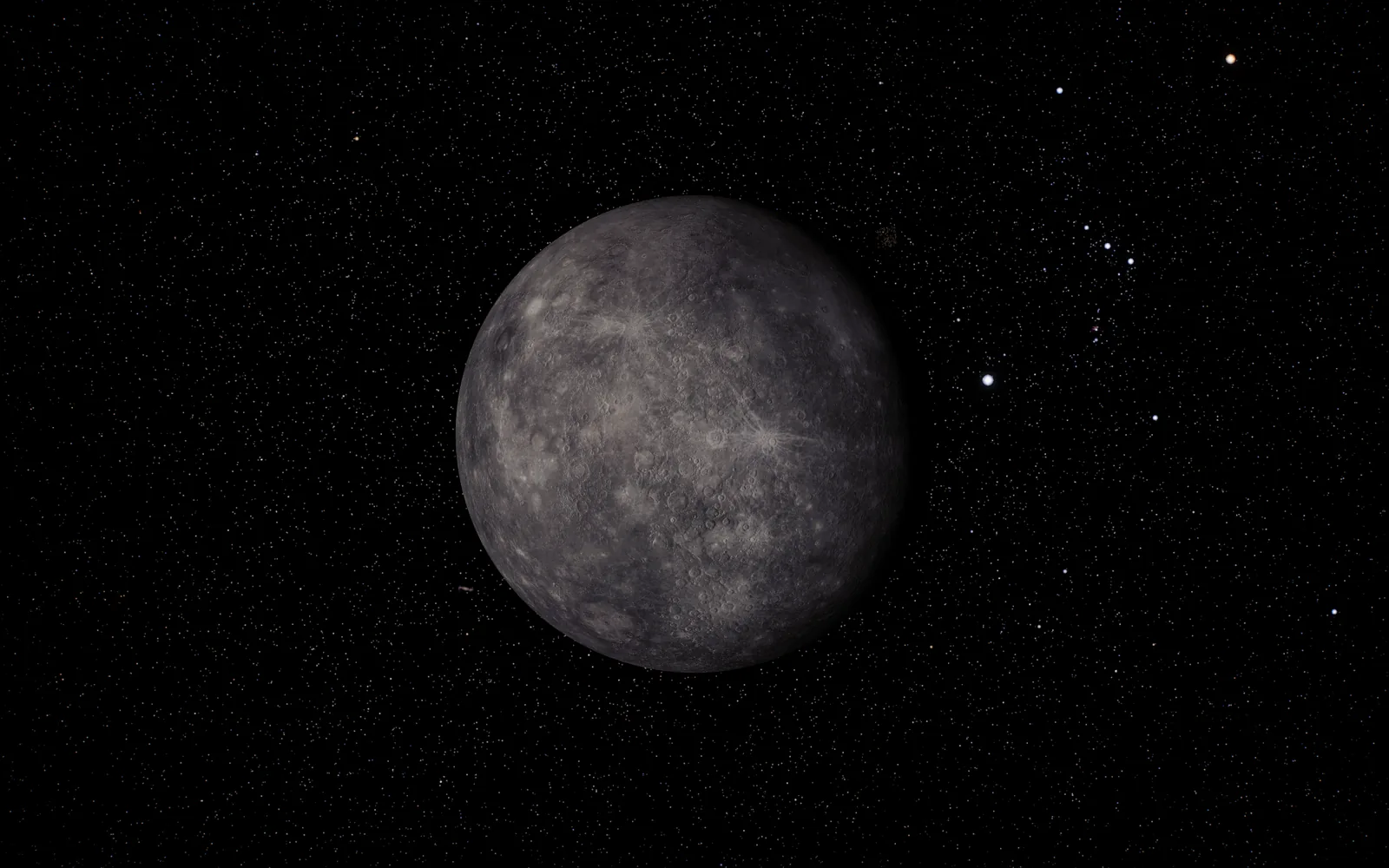
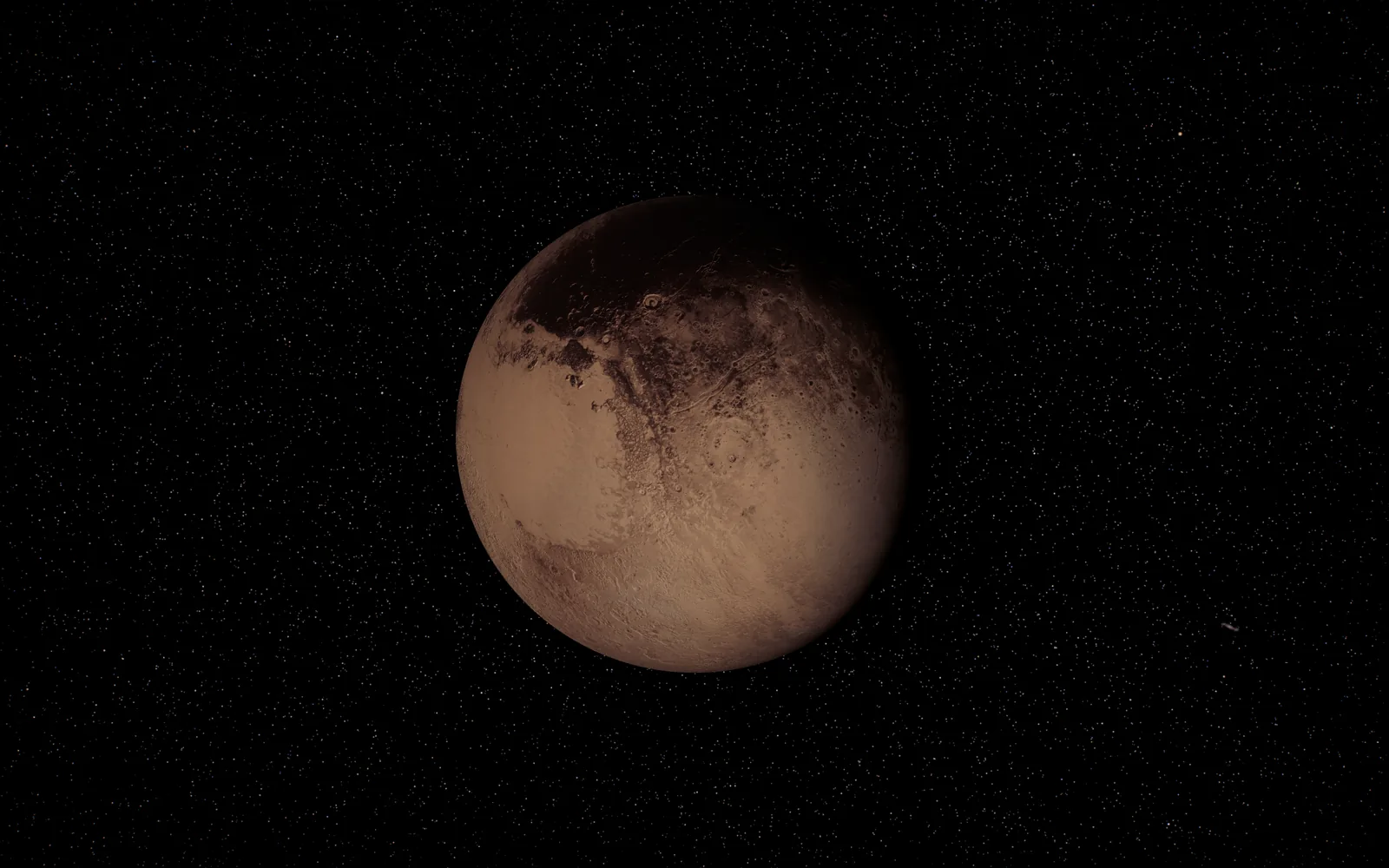
Side by side
| Property | Mercury | Pluto | Difference |
|---|---|---|---|
| Type | Terrestrial Planet | Dwarf Planet | |
| Diameter | 4,879 km | 2,377 km | Mercury is 2.1× wider |
| Distance from Sun | 57.9M km | 5.9B km | Pluto is 102× farther out |
| Orbital period | 88 days | 248 years | Pluto's year is 1,029× longer |
| Number of moons | 0 | 5 | Only Pluto has moons |
| Axial tilt | 0.034° | 122.53° | Pluto by 122° |
To scale
About Mercury
Mercury is the smallest planet in the solar system and the closest to the Sun, completing an orbit every 88 Earth days at an average distance of 57.9 million km. Its diameter of 4,879 km is barely larger than Earth's Moon. With essentially no atmosphere to retain heat, the dayside reaches 430 °C while the nightside falls below −180 °C — the steepest temperature swing of any planet.
About Pluto
Pluto is a dwarf planet in the Kuiper Belt, the first such object ever discovered, and the largest known. With a diameter of 2,377 km it is smaller than Earth's Moon. Its 248-Earth-year orbit is so eccentric (e = 0.249) that for 20 years of every orbit Pluto is closer to the Sun than Neptune. Reclassified from "planet" to "dwarf planet" by the IAU in 2006, it has five moons; the largest, Charon, is so massive that the two orbit a barycentre outside Pluto itself.
See them side by side in 3D
Open the 3D viewer to fly between Mercury and Pluto at any time speed and scale. The viewer renders both bodies with realistic textures, lighting, and orbital motion in real time.