Comparison · Updated October 2026
Uranus vs Neptune.
Uranus and Neptune are the two ice giants — physically similar in mass, radius, and chemistry, but different in colour, internal heat, axial tilt, and weather. Together they are the least-explored class of planet in the solar system, with only one flyby each from Voyager 2.
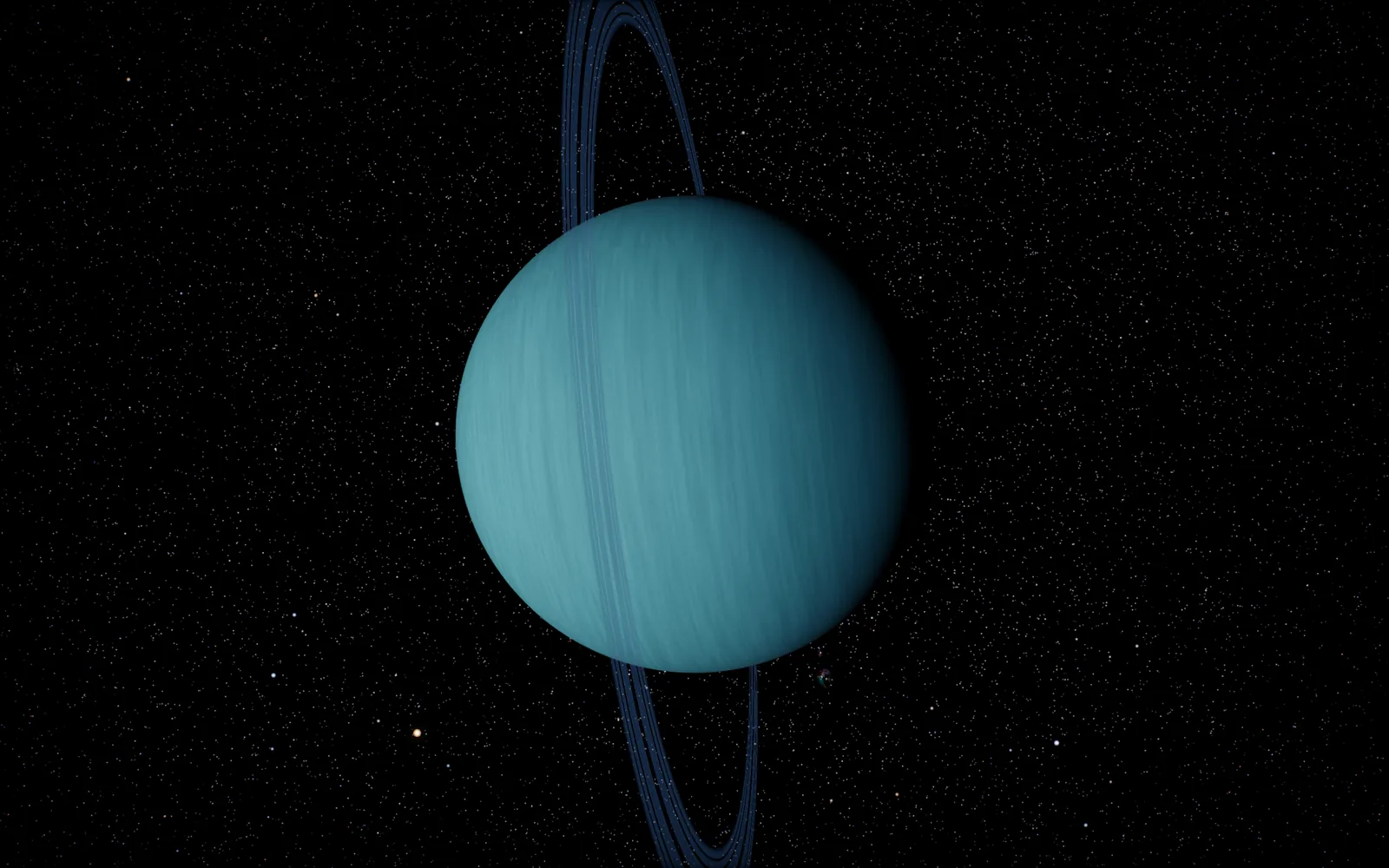
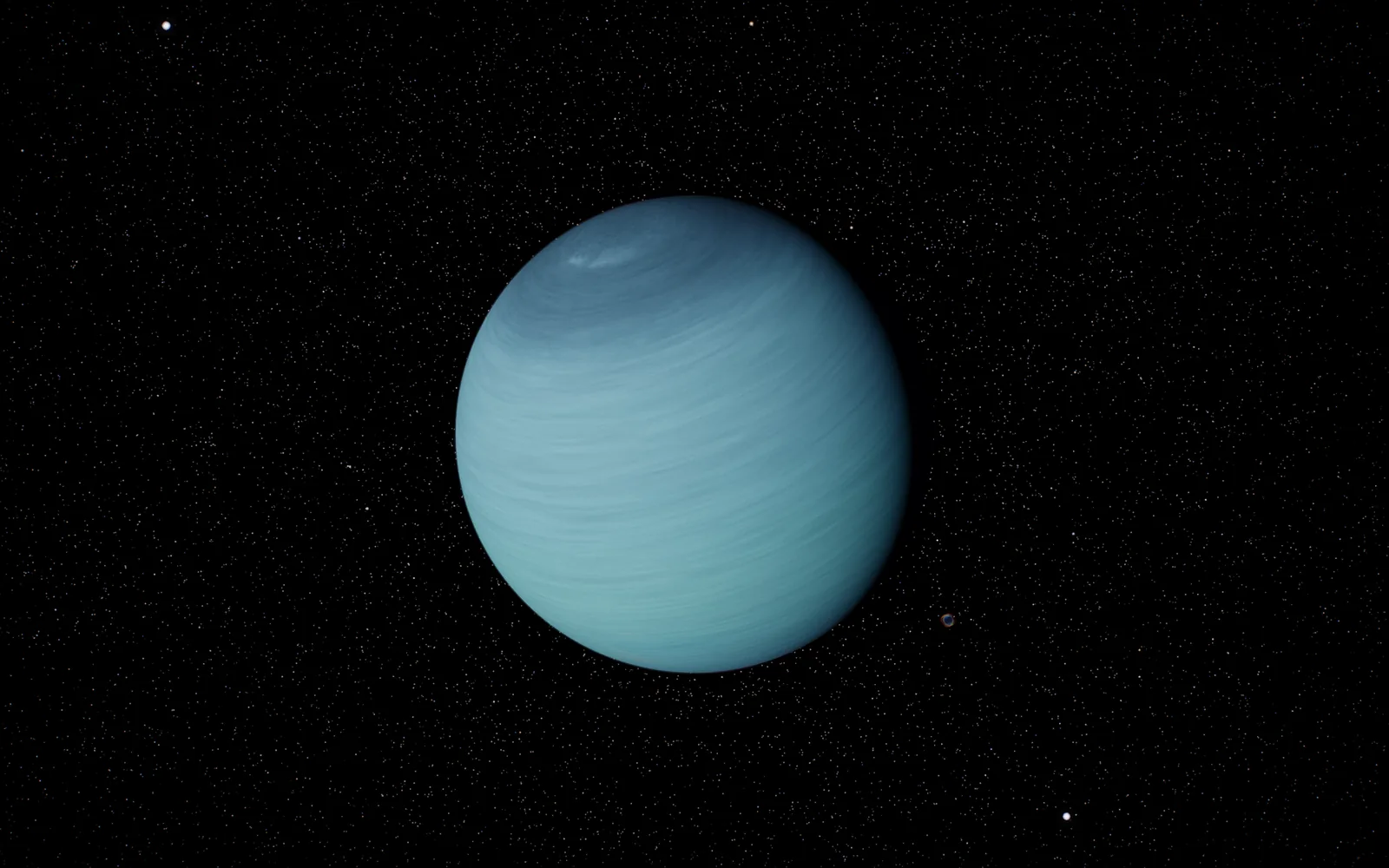
Side by side
| Property | Uranus | Neptune | Difference |
|---|---|---|---|
| Type | Ice Giant | Ice Giant | Same kind |
| Diameter | 50,724 km | 49,244 km | Uranus is 1× wider |
| Distance from Sun | 2.87B km | 4.5B km | Neptune is 1.6× farther out |
| Orbital period | 84 years | 164.8 years | Neptune's year is 2× longer |
| Number of moons | 29 | 16 | Uranus has 13 more |
| Axial tilt | 97.77° | 28.32° | Uranus by 69° |
To scale
About Uranus
Uranus is the seventh planet from the Sun, an ice giant tilted nearly 98° so it rolls along its orbit on its side. With a diameter of 50,724 km and an 84-Earth-year orbit, it is the third-largest planet by radius and the coldest planetary atmosphere in the solar system, with cloud-top temperatures around −224 °C. Its pale blue-green colour comes from methane in the upper atmosphere absorbing red light.
About Neptune
Neptune is the eighth and farthest planet from the Sun, a deep-blue ice giant with the strongest sustained winds of any planet — up to 2,100 km/h. Its 49,244 km diameter is roughly four times Earth's. At an average 4.5 billion km from the Sun, sunlight there is just 1/900 as bright as on Earth, and a single Neptunian year takes 164.8 Earth years. It has 16 known moons, including Triton, which orbits backwards and is likely a captured Kuiper Belt object.
See them side by side in 3D
Open the 3D viewer to fly between Uranus and Neptune at any time speed and scale. The viewer renders both bodies with realistic textures, lighting, and orbital motion in real time.