Pillar · Concept · Updated October 2026
The habitable zone.
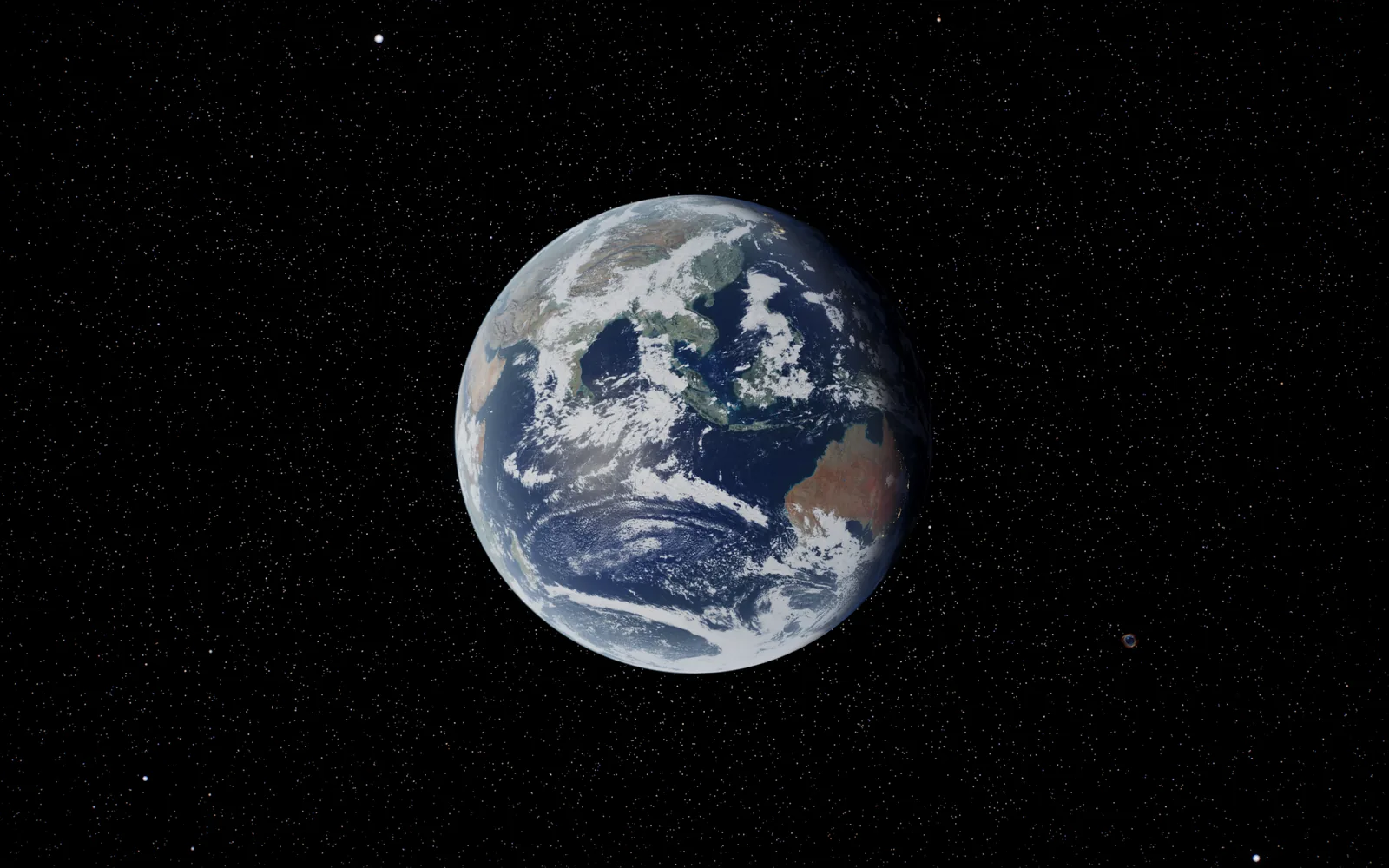
The habitable zone — sometimes called the "Goldilocks zone" — is the range of distances from a star where a planet's temperature can support liquid water on its surface. Around the Sun, the conservative habitable zone runs from about 0.95 to 1.37 astronomical units, putting Earth firmly inside, Venus just inside the inner edge (and uninhabitable due to runaway greenhouse), and Mars just inside the outer edge (uninhabitable today, but potentially habitable in the past).
Open the 3D viewer →Goldilocks: not too hot, not too cold
A planet that's too close to its star will lose any surface water as vapour, then to space — Venus is the cautionary tale. Too far, and water freezes — Mars today. The habitable zone is the narrow region between, where surface conditions allow liquid water. Liquid water matters because every life form we know of depends on it as a solvent.
It depends on the star
Around hotter, brighter stars the habitable zone is further out. Around cooler red dwarfs it sits very close in — sometimes within tidal-locking distance. The Sun is a G-type star with the habitable zone in roughly the right place to give life a comfortable several billion years before stellar evolution disrupts it.
Earth, Venus, and Mars
Earth sits at 1 AU, comfortably inside. Venus at 0.72 AU is just inside the inner edge — and lost. Mars at 1.52 AU is just inside the outer edge — and frozen. Both bracket Earth at distances where small differences in atmosphere and history determined wildly different outcomes.
The galactic context
There is also a "galactic habitable zone" — a ring of the Milky Way disc not too close to the dangerous galactic centre, not too far out where heavy elements run thin. Our Sun sits inside it, at about 26,000 light years from the centre. Most of our galaxy's habitable real estate is concentrated within this ring.
Bodies in this category
Frequently asked questions
What is the habitable zone?
The range of orbital distances from a star where a planet can support liquid water on its surface.
Is Earth in the habitable zone?
Yes — Earth sits comfortably inside the Sun's habitable zone at 1 astronomical unit.
Why is Mars not habitable?
Mars is just inside the outer edge of the habitable zone, but it lost most of its atmosphere and water early in its history. The surface today is frozen and exposed to radiation.