Ranked · Updated November 2026
The hottest planets, ranked.
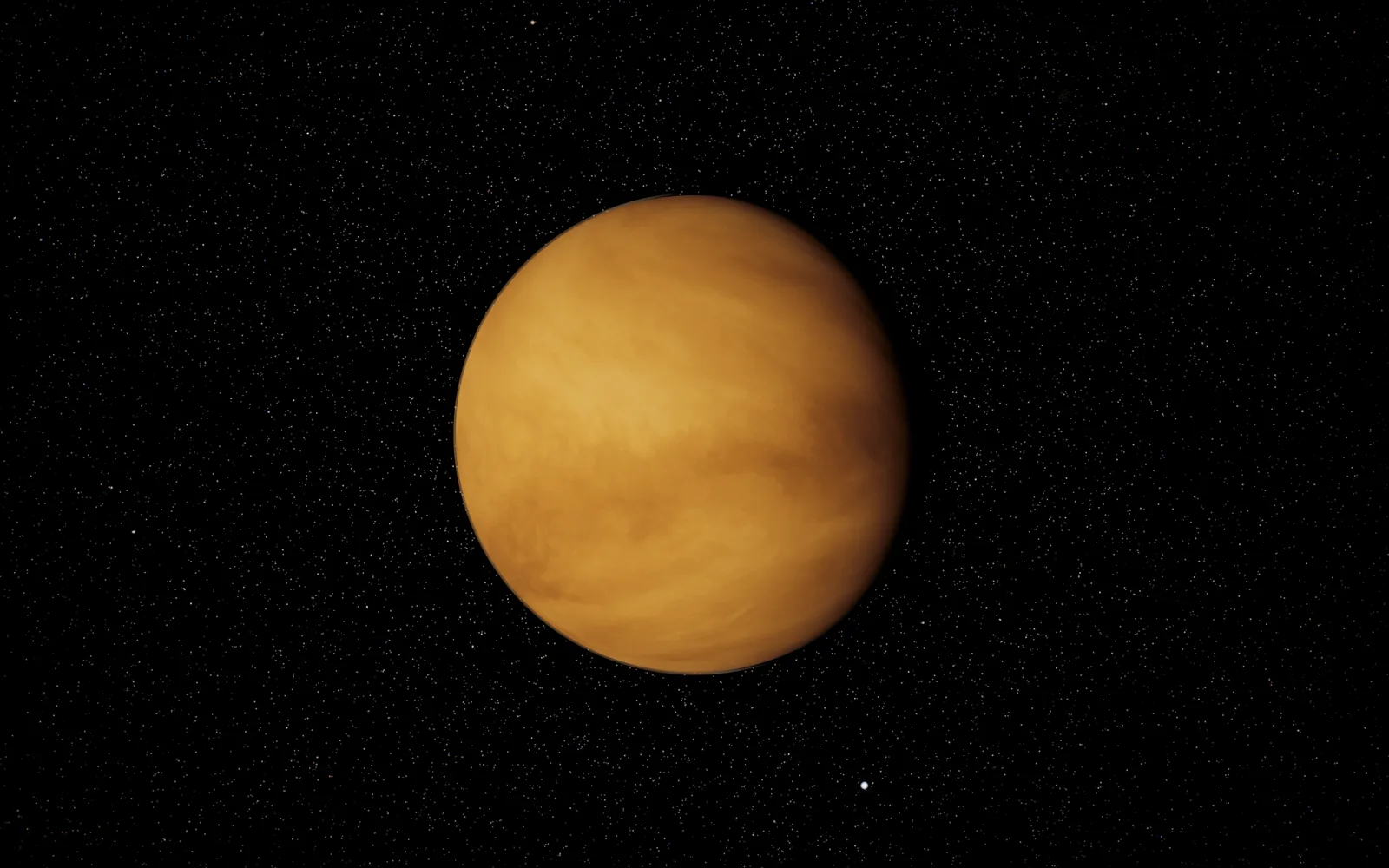
Venus is the hottest planet in the solar system, with an average surface temperature of about 464 °C (867 °F). It is hotter than Mercury, though nearly twice as far from the Sun, because its thick carbon dioxide atmosphere traps the heat. Here are all eight planets, hottest first.
Open the 3D viewer →- Venus ~464 °C surface. Runaway greenhouse, 92-bar CO₂ atmosphere. Hotter than Mercury despite being further from the Sun.
- Mercury 167 °C mean. Up to 430 °C dayside, but down to −180 °C at night. No atmosphere to retain heat.
- Earth ~15 °C global mean. The Goldilocks case.
- Mars About −60 °C average. Thin atmosphere lets heat escape almost as fast as it arrives.
- Jupiter −108 °C at the 1-bar level. Internal heat raises the deeper layers significantly.
- Saturn −139 °C at the 1-bar level.
- Uranus −197 °C at the 1-bar level, a little warmer than Neptune there, though higher up its atmosphere dips to −224 °C, the coldest of any planet.
- Neptune −201 °C at the 1-bar level.
All eight planets by temperature
| Planet | Celsius | Fahrenheit | Kelvin | Measured at |
|---|---|---|---|---|
| Venus | 464 °C | 867 °F | 737 K | Surface, average |
| Mercury | 167 °C | 333 °F | 440 K | Surface, average |
| Earth | 15 °C | 59 °F | 288 K | Surface, average |
| Mars | −59 °C | −74 °F | 214 K | Surface, average |
| Jupiter | −108 °C | −162 °F | 165 K | 1-bar level |
| Saturn | −139 °C | −218 °F | 134 K | 1-bar level |
| Uranus | −197 °C | −323 °F | 76 K | 1-bar level |
| Neptune | −201 °C | −330 °F | 72 K | 1-bar level |
Temperatures are from NASA's planetary fact sheets. Fahrenheit is worked out from the Celsius figure (multiply by 1.8 and add 32).
Why Venus is hotter than Mercury
Mercury is the closest planet to the Sun, at an average of 57.9 million km, and its sunlit side reaches about 430 °C (800 °F). It has almost no atmosphere, only a thin exosphere of atoms blasted off its surface, so the heat escapes at night and the ground falls to about −180 °C (−290 °F). Its average works out at 167 °C.
Venus, at 108.2 million km, gets less sunlight, and its bright clouds reflect most of what arrives: its Bond albedo is 0.77. Without a greenhouse effect it would sit at its black-body temperature of 227 K (about −47 °C), colder than Earth's 254 K. Its real surface is 737 K. The difference is a runaway greenhouse effect. The atmosphere is 96.5% carbon dioxide, the pressure at the surface is 92 bar, as much as being more than 3,000 feet (about 900 m) under water on Earth, and it is hot enough to melt lead, with almost no difference between day and night.
Earth shows the same effect on a gentler scale. Its black-body temperature is 254 K (−19 °C) and its real average is 288 K (15 °C), so the greenhouse effect keeps Earth about 34 °C warmer than it would otherwise be.
Mars and the giant planets
Mars has a thin carbon dioxide atmosphere, 6.36 millibars at the surface, less than 1% of Earth's. It averages about −59 °C, and at the Viking 1 lander site the temperature swung from −89 °C to −31 °C over a day.
NASA notes that none of the giant planets has a true surface, and the pressure deep in their atmospheres runs to far more than 1,000 bar. So their temperatures are quoted at the 1-bar level, where the pressure is about the same as at Earth's surface, near the cloud tops. Higher up it is colder again. At the 0.1-bar level Jupiter is −161 °C and Neptune −218 °C.
Uranus is a little warmer than Neptune at the 1-bar level, though Neptune is much farther from the Sun. Higher in its atmosphere Uranus falls to 49 K (−224 °C), and NASA notes that in some places it is even colder than Neptune.
Hotter than any planet
The Sun's visible surface is 5,772 K, about eight times the temperature of Venus's surface in kelvin, and its core reaches about 15 million °C. Read how hot the Sun is, layer by layer, or compare the planets yourself in the 3D viewer.
Frequently asked questions
What is the hottest planet in the solar system?
Venus, with an average surface temperature of about 464 °C (867 °F) on NASA's fact sheet. NASA's Venus page rounds it to about 467 °C (872 °F).
Why is Venus hotter than Mercury?
Venus's thick carbon dioxide atmosphere traps heat in a runaway greenhouse effect. Mercury has almost no atmosphere, so its heat escapes at night.
What is the coldest planet?
Neptune is the coldest at the 1-bar level, at −201 °C. Uranus reaches the lowest temperature, 49 K (−224 °C), high in its atmosphere. Pluto, a dwarf planet, averages about −225 °C.
Which planet has the biggest temperature swing?
Mercury. Its surface reaches about 430 °C in the day and drops to about −180 °C at night, a range of about 600 °C.
Sources
- NASA NSSDC: Planetary Fact Sheet, mean temperatures and distances, and Pluto's mean temperature
- NASA NSSDC: Venus Fact Sheet
- NASA NSSDC: Mercury Fact Sheet
- NASA NSSDC: Earth Fact Sheet
- NASA NSSDC: Mars Fact Sheet
- NASA NSSDC: Jupiter Fact Sheet
- NASA NSSDC: Saturn Fact Sheet
- NASA NSSDC: Uranus Fact Sheet
- NASA NSSDC: Neptune Fact Sheet
- NASA Science: Venus facts
- NASA Science: Mercury facts
- NASA Science: Uranus facts
- NASA Science: Jupiter facts
- NASA Science: Saturn facts
- NASA Science: Neptune facts