Astronomy mode · A free online planetarium
The night sky, from where you stand.
Every star, planet and the Moon over your town right now, where they really are. Look round, tap anything, watch it rise and set.
Free, in your browser. No app to install.
La Palma, 15 June 2026: dusk to full dark, 2 hours 40 minutes in 14 seconds.
Light pollution, Bortle 1 to 9
What a city takes from the night sky.
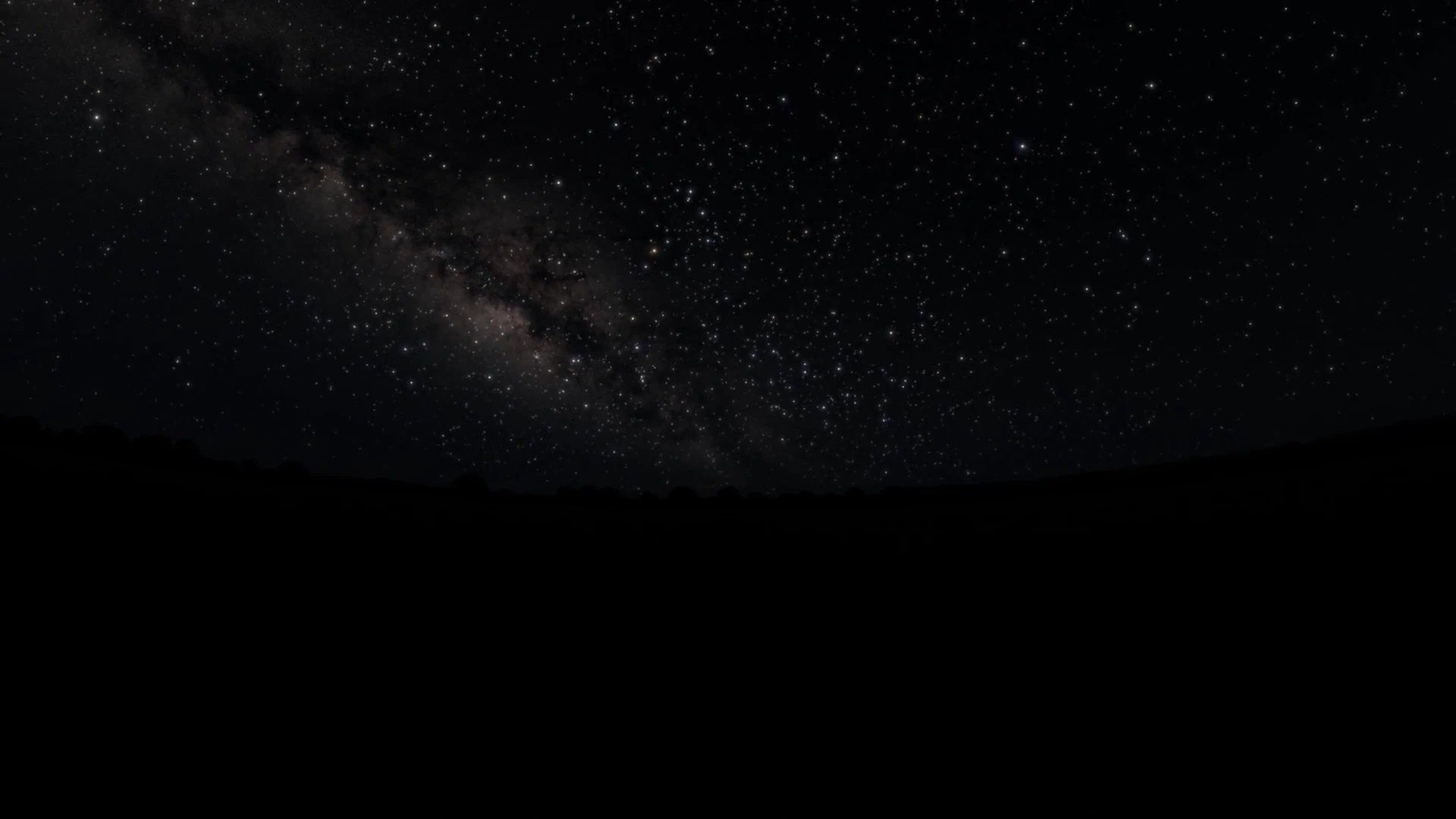
One sky, one minute: looking south over central Spain on the night of 15 July 2026. Drag from a truly dark site to an inner city. The Milky Way goes first, then the faint stars, until only the brightest of Scorpius and Sagittarius are left.


Bortle 1 · Excellent dark siteSky 21.90 mag per square arcsecond overhead · faintest star about magnitude 7.8
Each class is drawn with Astronomy mode’s own model: the sky brightness overhead that the class is quoted at, and the faintest star an experienced observer sees there6,7, with the eye’s threshold against that sky from Schaefer8. Free, the sky is drawn as a suburban sky, class 5. With Astronomy Pro you set your own.In Astronomy mode, Sky darkness sets your own sky’s class.
Checked against JPL Horizons and the US Naval Observatory
How accurate is this sky map?
- 2.2″The Sun and the planets, at worst, against JPL Horizons1,2
- 10″The Moon, at worst, against JPL Horizons1,2
- 0.6″The navigational stars, at worst, against the USNO1,3
- 30sRise, transit and set, against the USNO’s times1,3
We compare the mode’s positions with JPL Horizons and the US Naval Observatory for four places and moments, and keep the same comparison as an automated test in our code. One arcsecond is a 3,600th of a degree. Jupiter’s moons land within 0.123 of Jupiter’s radius of where Horizons puts them.1
The planets come from the VSOP87 theory4, the Moon from Meeus’ lunar theory5 and the stars from the HYG and Tycho-2 catalogues, each moved by its own motion to the date13,14, with the air’s refraction near the horizon. The sky’s brightness follows measured twilight10 and moonlight9.
What’s in the sky tonight, drawn as you would see it.

The Moon
Its real face and phase, the night side faint in earthshine.

Twilight
Facing east after sunset: the Earth’s shadow on the horizon, the Belt of Venus above it.

The ISS
The space station’s pass, with its path for the next three minutes.

The aurora
The northern lights, as strong as the Kp index NOAA measured.11

Astronomy Pro · Deep zoom
Jupiter’s disc and its four large moons, each where it really is.5
A free planetarium, and Astronomy Pro.
Free
The live sky over you, in any browser, for as long as you like.
- The sky right nowFrom your device’s position or your own town, on the live clock.
- The stars you could seeStars to magnitude 10, shown down to the faintest your sky allows.
- Constellations and namesThe figures, the bright stars and the planets named. Search finds any of them.
- Tap for the detailsBrightness, size and distance, and when it rises, sets and stands highest.
- Twilight, moonlight and the Milky WayThe sky’s own brightness from dusk to full dark.
- The ISS and the auroraThe station’s passes and the northern lights, from live data.
- Red night modeEverything in red, for using it outside in the dark.
- Share a skyCopy a link to the view: it opens the same place, moment and direction.
Astronomy Pro Coming soon
Any night, from anywhere on Earth, up close to the planets.
- Any date and timeAt any speed, forwards or back.
- Any place on EarthFrom the city search or coordinates.
- Deep zoomThe planets’ discs, Saturn’s rings and Jupiter’s moons.
- Your own sky’s darknessThe light pollution setting, Bortle 1 to 9.
$3.99 a month or $29.99 a year
Free for 7 days, then billed monthly or yearly. Cancel any time.
We are opening Astronomy Pro soon. Press Notify me and we email you once, the day it opens.
Being built for Pro next: your telescope’s view, forecasts and an observing log.
More of tonight’s sky.
- Print this skyAny night over any place, as a star map print.
- The night sky on any dateAny place and minute from 1800 to 2200, free.
- What’s visible tonightWhich planets are up, and when to look.
- Moon phase todayTonight’s Moon and every phase this month.
- Sky events calendarEclipses, meteor showers and planets at opposition.
Questions about the online planetarium.
Is this online planetarium free?
Yes. The live sky from where you are is free in your browser, with the constellations and names, search, the info cards, twilight and the Milky Way, the ISS, the aurora and red night mode. You need no account. Astronomy Pro adds other dates and places, deep zoom and the light pollution setting, for $3.99 a month or $29.99 a year after a 7-day free trial.Yes. The live sky from where you are is free in your browser, with the constellations and names, search, the info cards, twilight and the Milky Way, the ISS, the aurora and red night mode. You need no account. Astronomy Pro, coming soon, adds other dates and places, deep zoom and the light pollution setting.
Do I need to download an app?
No. It runs in the web browser on a phone, a tablet or a computer. Open it and the sky over you is there.
How does it know where I am?
It asks your browser only when you press Use my location, and the position stays on your device. You can search for your town instead, from every place in GeoNames with more than 15,000 people, or type in coordinates.16
How accurate is it?
We check it against JPL Horizons and the US Naval Observatory. The Sun and the planets land within 2.2 arcseconds, the Moon within 10 and the navigational stars within 0.6. Rise, transit and set come within half a minute of the USNO's times.1,2,3
What is the Bortle scale?
A nine-step scale of how dark a sky is, from class 1, an excellent dark site, to class 9, an inner-city sky. John Bortle published it in Sky & Telescope in February 2001. Each class has a typical sky brightness and a faintest star you can see.6,7
Can I see the sky on another date or from somewhere else?
Yes, with Astronomy Pro: any date and time, at any speed, from any place on Earth. A shared link always opens at its own place and moment, free. For a printable chart of any night, try the night sky on any date.A shared link always opens at its own place and moment, free. Moving to any date or place yourself is part of Astronomy Pro, coming soon. For a chart of any night today, try the night sky on any date, free.
Can I share what I am looking at?
Yes. Press the link button to copy a link to the view. It holds the place, the moment and the direction you face, after /viewer/#sky/, and anyone who opens it sees the same sky.
Is it the same sky as the star map prints?
Yes. The star map prints are drawn from Astronomy mode's positions, and the code in the corner of a print opens its sky here.
Sources and credits
- Our comparison of Astronomy mode with JPL Horizons and the US Naval Observatory for four places and moments (London at midnight and before dawn, Sydney at dusk, Denver in daylight), 14 October 2026: docs/astronomy-mode-verification.md and tests/astro-coords.test.js in our code.
- JPL Horizons System, NASA Jet Propulsion Laboratory. ssd.jpl.nasa.gov/horizons
- Astronomical Applications Department, US Naval Observatory: celestial navigation and rise, transit and set data. aa.usno.navy.mil/data
- Bretagnon, P. and Francou, G. (1988), Planetary theories in rectangular and spherical variables: VSOP87 solutions, Astronomy and Astrophysics 202, 309. CDS VI/81
- Meeus, J. (1998), Astronomical Algorithms, 2nd edition, Willmann-Bell: the Moon (chapter 47) and Jupiter's moons (chapter 44).
- Bortle, J. E. (2001), Introducing the Bortle Dark-Sky Scale, Sky & Telescope 101(2), 126. skyandtelescope.org
- Bortle scale, Wikipedia, read 14 October 2026: each class's naked-eye limiting magnitude and its sky brightness from the Dark Skies Awareness nomogram. We use the middle of each range; class 9's sky brightness is our extrapolation. en.wikipedia.org/wiki/Bortle_scale
- Schaefer, B. E. (1990), Telescopic limiting magnitudes, Publications of the Astronomical Society of the Pacific 102, 212. ADS
- Krisciunas, K. and Schaefer, B. E. (1991), A model of the brightness of moonlight, Publications of the Astronomical Society of the Pacific 103, 1033. ADS
- Patat, F., Ugolnikov, O. S. and Postylyakov, O. V. (2006), UBVRI twilight sky brightness at ESO-Paranal, Astronomy and Astrophysics 455, 385. ADS
- NOAA Space Weather Prediction Center, the planetary K-index. swpc.noaa.gov
- CelesTrak, orbital elements for the International Space Station. celestrak.org
- HYG Database v4.2, Astronexus, CC BY-SA 4.0. astronexus.com/hyg
- Høg, E. et al. (2000), The Tycho-2 Catalogue of the 2.5 million brightest stars, Astronomy and Astrophysics 355, L27; ESA Hipparcos and Tycho-2 catalogues. cosmos.esa.int
- NASA Goddard Space Flight Center Scientific Visualization Studio, Deep Star Maps 2020; Gaia DR2: ESA/Gaia/DPAC. svs.gsfc.nasa.gov/4851
- GeoNames, cities15000, CC BY 4.0. geonames.org
Astronomy mode draws the Milky Way from NASA Goddard Space Flight Center Scientific Visualization Studio’s Deep Star Maps 2020, with Gaia DR2 from ESA/Gaia/DPAC; the stars from the HYG Database v4.2 (CC BY-SA 4.0) and Tycho-2 (ESA); the planets from VSOP87 (CDS VI/81); the Moon and the planets’ discs from Solar System Scope’s maps (CC BY 4.0), based on NASA data; places from GeoNames (CC BY 4.0); the ISS from CelesTrak’s elements; the aurora from NOAA SWPC’s Kp index. The constellation figures join the IAU stick figures between catalogue stars, and the constellation boundaries are Roman (1987, CDS VI/42). The meadow and tree line round the horizon are a generated photograph made for Astronomy mode with gpt-image-2, lit in the mode by the sky’s own light. Data modified by Polyxmedia; no endorsement by NASA, ESA or any data provider is implied. Every source is on our credits page.
Every picture on this page is Astronomy mode itself, rendered on a desktop computer. Privacy.