To scale
Planet size comparison.
Every planet, Pluto and our Moon side by side at their true sizes, with the edge of the Sun for scale. Then line them up in 3D and fly round them.
The planets side by side, to scale
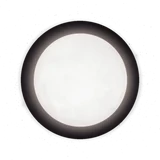 Sun
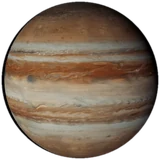 Jupiter
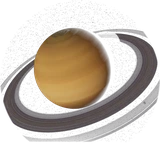 Saturn
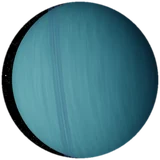 Uranus
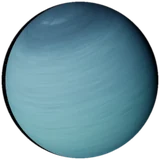 Neptune
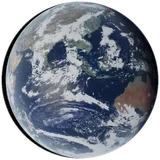 Earth
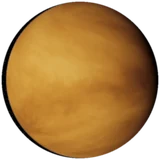 Venus
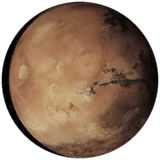 Mars
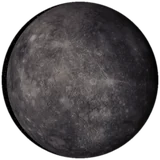 Mercury
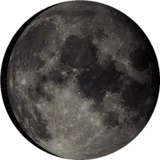 Moon
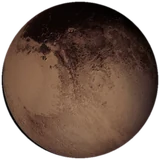 Pluto
From the biggest to the smallest
| World | Diameter | Width, Earth = 1 | Volume, Earth = 1 |
|---|---|---|---|
| Sun | 1,391,400 km | 109.2× | 1,302,097× |
| Jupiter | 139,822 km | 11.0× | 1,321× |
| Saturn | 116,464 km | 9.14× | 764× |
| Uranus | 50,724 km | 3.98× | 63.1× |
| Neptune | 49,244 km | 3.86× | 57.7× |
| Earth | 12,742 km | 1.00× | 1.0× |
| Venus | 12,104 km | 0.95× | 0.86× |
| Mars | 6,779 km | 0.53× | 0.15× |
| Mercury | 4,879 km | 0.38× | 0.056× |
| Moon | 3,475 km | 0.27× | 0.020× |
| Pluto | 2,377 km | 0.19× | 0.0065× |
Mean diameters: the width of a ball with the same volume. Jupiter and Saturn spin so fast that they bulge, and are a few per cent wider at the equator. Saturn's rings are not counted.
The biggest and the smallest
Jupiter is the biggest planet, about 11 times as wide as the Earth. Mercury is the smallest, a little over a third of the Earth's width, and smaller than two moons: Jupiter's Ganymede and Saturn's Titan. Venus is the closest to the Earth in size, at 95% of its width. Pluto, a dwarf planet since 2006, is smaller than our Moon.
See them in 3D
In the viewer's To Scale mode the Sun, the planets and Pluto stand side by side at their real sizes. Step from Pluto up to the Sun with the arrow keys or a swipe, and fly round any of them. Switch on Realistic to see them at their true distances too, where most of them shrink to points.
Questions
What is the biggest planet?
Jupiter, 139,822 km across on average, about 11 times the Earth's width. More than 1,300 Earths would fit inside it.
What is the smallest planet?
Mercury, 4,879 km across, about 38% of the Earth's width. Pluto is smaller still, 2,377 km across, but it has been a dwarf planet since 2006.
How many Earths fit inside the Sun?
About 1.3 million by volume. The Sun is 1,391,400 km across, about 109 Earths side by side.
Which planet is closest in size to the Earth?
Venus, 12,104 km across, 95% of the Earth's width. That is why it is sometimes called the Earth's twin.
Sources
- Planetary Fact Sheet (metric), NASA NSSDCA
- The Sun's, the Moon's and each planet's fact sheets, NASA NSSDCA (volumetric mean radius)
- Pluto's radius from New Horizons images, Nimmo et al. 2017, Icarus
- Ganymede, NASA Science
- Titan: Facts, NASA Science
- Pluto, NASA Science (reclassified as a dwarf planet in 2006)