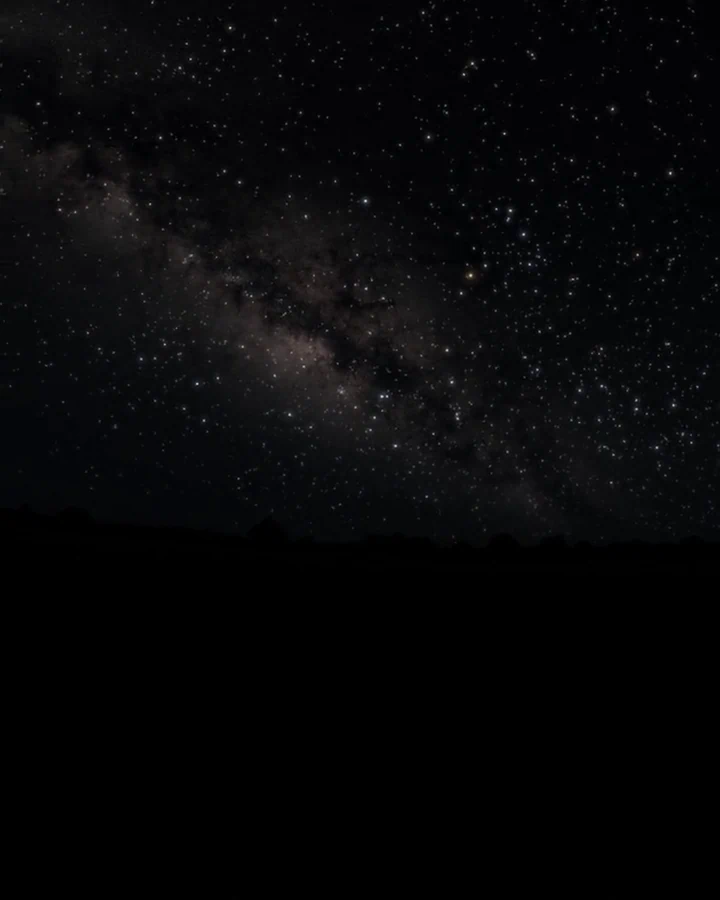
Washington, D.C. · Tonight, Monday 19 October
Tonight's sky over Washington, D.C.
The Sun sets at 18:24 and the sky is fully dark from 19:53 until 05:54. Saturn is up most of the night, then Mars and Jupiter before dawn. The Moon, a waxing gibbous 65% lit, sets at 01:20.
Sunset18:24
Fully dark19:53 to 05:54
Sunrise07:23
ClockWashington, D.C. time, EDT
The night, hour by hour
The sky over Washington, D.C. from sunset to sunrise, on the town's own clock: the band shades from twilight to full dark and back, and each bar is when the Moon or a planet is above the horizon, drawn bright while it can be seen. The dot is the best moment to look.
Planets tonight
Where and when to look for each planet from Washington, D.C.. A planet counts as visible when it is at least 5° up once civil twilight is over; Uranus and Neptune need 10° and a darker sky, and binoculars or a telescope.
-
MercuryNot tonight
Sets at 19:12, before the sky is dark enough.
Rises 09:27 · Sets 19:12 · Magnitude 0.2
-
VenusNot tonight
Sets at 18:06, before the Sun.
Rises 08:07 · Sets 18:06 · Magnitude −4.2
-
MarsBefore dawn
From 01:40 until dawn. Best around 06:20, 58° up in the south-east.
Rises 01:09 · Sets 15:21 · Magnitude 1.0
-
JupiterBefore dawn
From 02:33 until dawn. Best around 06:20, 48° up in the south-east.
Rises 02:03 · Sets 15:47 · Magnitude −1.9
-
SaturnMost of the night
From dusk until 05:33. Best around 23:50, 53° up in the south.
Rises 17:48 · Sets 06:02 · Magnitude 0.4
-
UranusMost of the night
From 21:11 until dawn. Best around 03:30, 72° up in the south. Binoculars show it as a blue-green point; under a dark country sky the eye only just can.
Rises 20:11 · Sets 10:40 · Magnitude 5.7
-
NeptuneMost of the night
From dusk until 04:31. Best around 23:20, 51° up in the south. Too faint for the eye: binoculars on a dark night or a small telescope show it.
Rises 17:24 · Sets 05:25 · Magnitude 7.7
The Moon tonight
Waxing gibbous, 65% lit
Rises 15:09 · Sets 01:20. Highest in the dark at 20:10, 32° up in the south. The Moon is 9.5 days old.
- Full MoonMon 26 Oct, 00:11
- Last quarterSun 1 Nov, 15:28
- New MoonMon 9 Nov, 02:01
- First quarterTue 17 Nov, 06:47
ISS passes over Washington, D.C.
The International Space Station crosses the sky as a bright, steady point, faster than a plane and without blinking lights. These are its visible passes over Washington, D.C. in the next five days, worked out in your browser from its latest orbit.
Working out the passes from the station's latest orbit…
Get an email before it passes
We email you on the day of each good pass over Washington, D.C., with the time and where to look. Free, and you can stop it any time.
The station's live position, its orbit and every pass on a 3D Earth are on where is the ISS.
Northern lights from Washington, D.C.
On NOAA's rule of thumb it takes Kp 6.9 (G2) to bring the northern lights low over Washington, D.C.'s northern horizon, and even the strongest storm on the scale does not bring it overhead. On NOAA's scale storms that strong come about 360 days per 11-year cycle. The camera on a phone picks up more than the eye.
The live forecast and the best time to look are on northern lights tonight.
The next two weeks
Each night's sunset, its fully dark hours and the Moon. The last column is the darkness with the Moon down, the time for faint stars and the Milky Way; the best nights are marked.
| Night | Sunset | Fully dark | Moon | Dark, no Moon |
|---|---|---|---|---|
| Tonight | 18:24 | 19:53 to 05:54 | 65% ↑ 15:09 ↓ 01:20 | 4 h 34 min |
| Tue 20 Oct | 18:23 | 19:51 to 05:55 | 74% ↑ 15:37 ↓ 02:23 | 3 h 32 min |
| Wed 21 Oct | 18:21 | 19:50 to 05:56 | 82% ↑ 16:01 ↓ 03:27 | 2 h 29 min |
| Thu 22 Oct | 18:20 | 19:49 to 05:57 | 89% ↑ 16:25 ↓ 04:32 | 1 h 25 min |
| Fri 23 Oct | 18:19 | 19:48 to 05:58 | 95% ↑ 16:48 ↓ 05:39 | 19 min |
| Sat 24 Oct | 18:17 | 19:46 to 05:59 | 99% ↑ 17:14 ↓ 06:50 | – |
| Sun 25 Oct | 18:16 | 19:45 to 05:59 | 100% ↑ 17:42 ↓ 08:04 | – |
| Mon 26 Oct | 18:15 | 19:44 to 06:00 | 98% ↑ 18:16 ↓ 09:21 | – |
| Tue 27 Oct | 18:13 | 19:43 to 06:01 | 94% ↑ 18:58 ↓ 10:37 | – |
| Wed 28 Oct | 18:12 | 19:42 to 06:02 | 87% ↑ 19:49 ↓ 11:48 | 7 min |
| Thu 29 Oct | 18:11 | 19:41 to 06:03 | 79% ↑ 20:52 | 1 h 11 min |
| Fri 30 Oct | 18:10 | 19:40 to 06:04 | 69% ↑ 22:03 ↓ 12:48 | 2 h 23 min |
| Sat 31 Oct | 18:09 | 19:39 to 05:05 | 57% ↑ 23:17 ↓ 13:36 | 3 h 38 min |
| Sun 1 Nov | 17:08 | 18:38 to 05:06 | 46% ↑ 23:31 ↓ 13:15 | 4 h 53 min |
Coming up in Washington, D.C.'s sky
The next eclipses, meteor showers and planets at opposition, as they will look from Washington, D.C.. Press Remind me and we email you the day before.
-
Orionid meteor shower peakPeaks Wednesday 21 October 2026, 14:27, with a 79% Moon. The best hours are after midnight on the nights around the peak, away from town lights.
-
Leonid meteor shower peakPeaks Tuesday 17 November 2026, 18:49, with a 55% Moon. The best hours are after midnight on the nights around the peak, away from town lights.
-
Uranus at oppositionOpposite the Sun on Wednesday 25 November 2026: up all night, climbing 72° high in the south around midnight.
-
Geminid meteor shower peakPeaks Monday 14 December 2026, 08:45, with a 25% Moon. The best hours are after midnight on the nights around the peak, away from town lights.
-
Quadrantid meteor shower peakPeaks Sunday 3 January 2027, 22:25, with a 12% Moon. The best hours are after midnight on the nights around the peak, away from town lights.
-
Annular solar eclipseSaturday 6 February 2027. Not seen from Washington, D.C.: the Moon's shadow misses it.
-
Jupiter at oppositionOpposite the Sun on Wednesday 10 February 2027: up all night, climbing 66° high in the south around midnight.
-
Mars at oppositionOpposite the Sun on Friday 19 February 2027: up all night, climbing 66° high in the south around midnight.
Every event for the next two years is on the sky events calendar.
The whole sky over Washington, D.C., live
Our free planetarium draws the stars, the planets, the Moon and the Milky Way over Washington, D.C. as they are right now, with the constellations named and when everything rises and sets.
Questions
What time is sunset in Washington, D.C. tonight?
The Sun sets at 18:24 EDT on Monday 19 October and rises again at 07:23 on Tuesday 20 October. Civil twilight ends at 18:51, when the brightest stars and planets appear.
When does it get dark in Washington, D.C. tonight?
The sky is fully dark, with the Sun 18° below the horizon, from 19:53 until 05:54 EDT: 10 h 1 min, 4 h 34 min of it with the Moon down. Nautical twilight ends at 19:22.
Which planets can I see from Washington, D.C. tonight?
Mars: From 01:40 until dawn. Best around 06:20, 58° up in the south-east. Jupiter: From 02:33 until dawn. Best around 06:20, 48° up in the south-east. Saturn: From dusk until 05:33. Best around 23:50, 53° up in the south. Mercury and Venus cannot be seen tonight.
What phase is the Moon tonight?
Waxing gibbous, 65% lit and 9.5 days old. It rises at 15:09 and sets at 01:20. The next full Moon is on Monday 26 October at 00:11 EDT. Every phase this month is on Moon phase today.
Can I see the northern lights from Washington, D.C.?
On NOAA's rule of thumb it takes Kp 6.9 (G2) to bring the northern lights low over Washington, D.C.'s northern horizon, and even the strongest storm on the scale does not bring it overhead. On NOAA's scale storms that strong come about 360 days per 11-year cycle. The camera on a phone picks up more than the eye. The live forecast is on northern lights tonight.
When can I see the ISS from Washington, D.C.?
The station is only seen when it is in sunlight and your sky is dark, so its passes come in the hour or two after sunset or before sunrise, in runs of a few days a few times a month. The passes listed on this page are worked out in your browser from its latest orbit, and pass alerts by email are free.
What is the best night for stargazing in the next two weeks?
Sunday 1 November, with 4 h 53 min of fully dark sky while the Moon is down. The table of the nights ahead has every night with its darkness and its Moon.
Nearby
- BaltimoreUnited States · 57 km
- RichmondUnited States · 154 km
- PhiladelphiaUnited States · 199 km
- NorfolkUnited States · 237 km
- Virginia BeachUnited States · 245 km
- PittsburghUnited States · 306 km
Every town is on tonight's sky by town. Which planets are up for anyone on Earth is on planets visible tonight, and the Moon's phase on Moon phase today.
Sources
- Positions of the Sun, the Moon and the planets: VSOP87 (Bretagnon and Francou 1988) and Jean Meeus, Astronomical Algorithms (2nd ed., 1998), chapter 47, run as our planetarium runs them and checked against JPL Horizons
- Rise, set and twilight follow the US Naval Observatory's definitions (the upper limb, 34′ of refraction, the Sun's centre 6°, 12° and 18° down), and the times were checked against the USNO's own tables
- Planet brightness: Mallama and Hilton (2018), Computing apparent planetary magnitudes for The Astronomical Almanac
- The ISS: its orbit from CelesTrak, run through SGP4 in your browser (satellite.js)
- The aurora: NOAA Space Weather Prediction Center, Tips on viewing the aurora, with geomagnetic latitudes from AACGM-v2 (Shepherd 2014) and the Kp forecast from NOAA
- GeoNames: Washington, D.C., its position and time zone (CC BY 4.0)