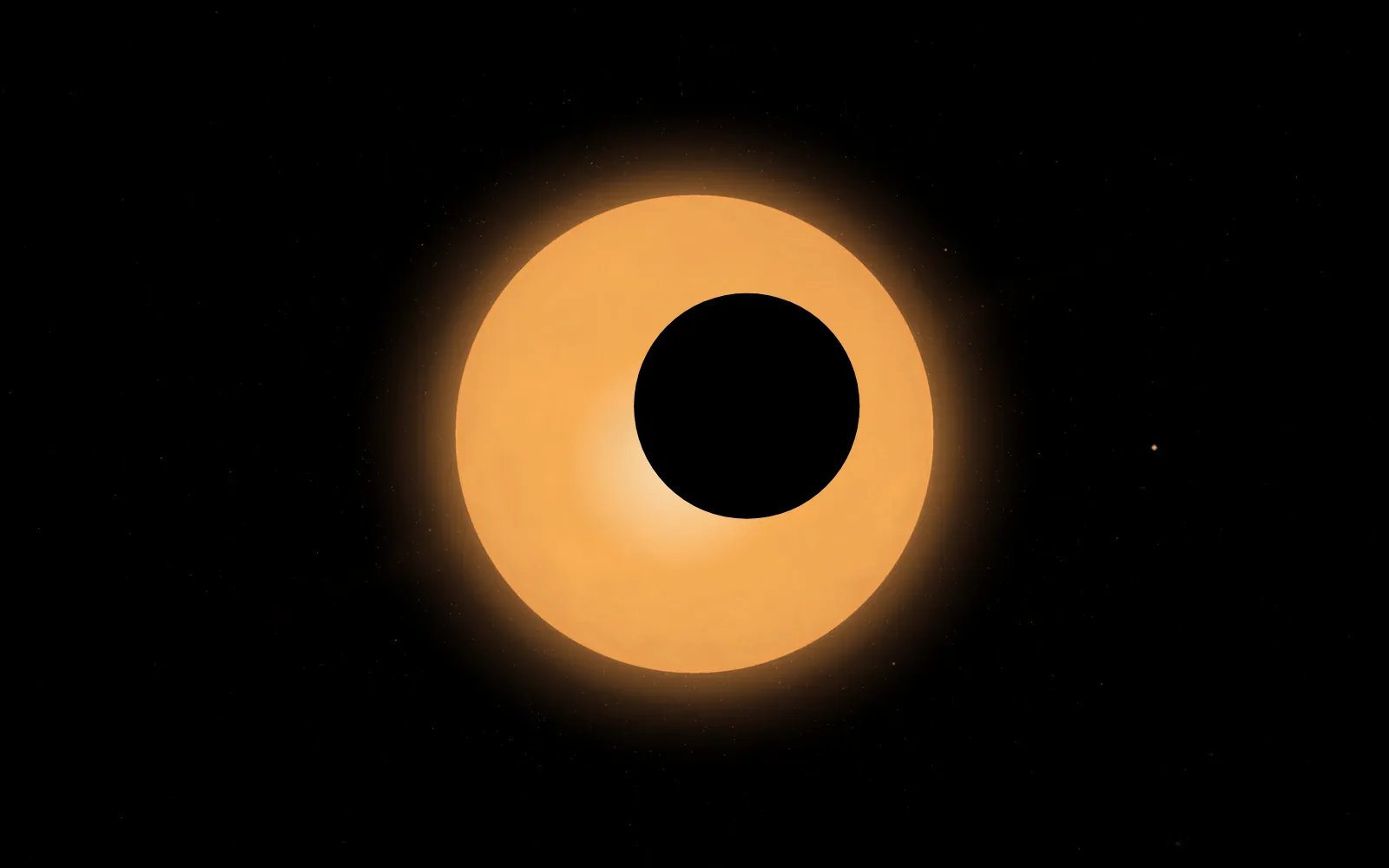
Rome, Italy · Partial solar eclipse · 2 August 2027
Eclipse 2027 in Rome
In Rome the Moon covers 74.5% of the Sun at 11:12 local time (CEST, UTC+2) on Monday 2 August 2027. The path of totality passes 700 km to the south.
Begins10:02:15 CEST
Greatest11:12:49 CEST
Your time09:12:49 UTC
When it happens in Rome
| Stage | CEST | UTC | Sun |
|---|---|---|---|
| Partial eclipse beginsC1, the Moon first touches the Sun | 10:02:15 | 08:02:15 | 42° |
| Greatest eclipsethe most of the Sun covered | 11:12:49 | 09:12:49 | 54° |
| Partial eclipse endsC4, the Moon leaves the Sun | 12:26:53 | 10:26:53 | 64° |
Monday 2 August 2027, local time in Rome (Central European Summer Time, UTC+2). The Sun column is its height above the horizon. Times are for the centre of Rome, 41.892° N, 12.511° E; a few kilometres away they shift by a few seconds.
Rome and the path of totality
The shaded band is the path of totality, the dashed line its centre, where totality lasts longest. Coastlines, rivers and borders: Natural Earth.
Rome is far outside the path of totality: its nearest stretch is 700 km to the south, and on the centre line there, 830 km away, totality lasts 5 min 43 s.
The nearest place in the path with its own page here is Kairouan, 720 km to the south, with 2 min 41 s of totality.
What you will see
Through eclipse glasses, the Moon's edge first touches the Sun at 10:02:15. By 11:12 it has turned the Sun into a crescent, with 74.5% of its face covered, and at 12:26:53 it moves clear. The whole eclipse lasts 2 h 25 min.
Outside the path some of the Sun always shows, and even a thin crescent is far too bright to look at, so glasses stay on from start to finish. The Sun is 54° up in the south-east: any open spot with a clear view that way works.
How to watch safely
- Wear eclipse glasses that meet the ISO 12312-2 standard whenever any part of the Sun is showing. Sunglasses, however dark, are not safe.
- Never look through binoculars, a telescope or a camera without a proper solar filter on the front.
- A pinhole projector works anywhere: a small hole in card throws an image of the Sun onto paper behind it.
- There is no safe moment without glasses in Rome: even at 74.5% a crescent of the Sun is still showing.
See it in 3D
The Moon’s shadow crossing the Earth on the day, drawn by our 3D viewer from the real positions of the Sun, the Moon and the Earth, with the umbra and penumbra at their true size. Press play to load it here, then play, pause and scrub through the eclipse, or open it in the full viewer.
Open this eclipse in the 3D viewer →
Get a reminder
We email you a day or two before, with the time. Leave your email once and we send a code to confirm it; nothing else arrives unless you ask for it.
Get this moment as a print: the sky over Rome at greatest eclipse, on a star map.
Questions
What time is the eclipse in Rome?
On Monday 2 August 2027 it begins at 10:02:15 CEST, is greatest at 11:12:49 and ends at 12:26:53. In UTC that is 08:02:15 to 10:26:53.
Is Rome in the path of totality?
No. Rome is 700 km outside the northern edge of the path, so it sees a partial eclipse, with 74.5% of the Sun covered at its deepest.
How much of the Sun is covered in Rome?
74.5% of its disc at 11:12:49 CEST, an eclipse magnitude of 0.786 (the share of the Sun's width the Moon covers).
Where is the nearest total eclipse to Rome?
The edge of the path of totality is 700 km to the south, and its centre line 830 km to the south, where totality lasts 5 min 43 s. The nearest place with its own page here is Kairouan, with 2 min 41 s.
Where is the Sun during the eclipse?
At greatest eclipse it is 54° up in the south-east (bearing 123°). At the start it is 42° up and at the end 64°.
Is it safe to look at?
Never without protection: use ISO 12312-2 eclipse glasses or a pinhole projector for the whole eclipse, and never look through binoculars, a telescope or a camera without a solar filter on the front.
Nearby
- TunisPartial, 97.0% of the Sun · 600 km south
- VallettaPartial, 97.3% of the Sun · 690 km south
- SoussePartial, 99.87% of the Sun · 690 km south
- KairouanTotal for 2 min 41 s · 720 km south
- ConstantinePartial, 99.94% of the Sun · 800 km south-west
- SfaxTotal for 5 min 39 s · 810 km south
The whole eclipse, its path and how it works are on the total solar eclipse of 2 August 2027 page, with every city on one list.
Sources
- Fred Espenak, EclipseWise: Besselian elements of the total solar eclipse of 2027 August 2, the numbers every time and duration on this page is worked from
- NASA Eclipse Web Site: Besselian elements and lunar radii for this eclipse
- NASA: path of totality, with centre-line durations
- IERS Bulletin A (8 October 2026): the Earth's predicted rotation on 2 August 2027, which sets Delta T to 69.4 s
- GeoNames: Rome, its coordinates, height and time zone (CC BY 4.0)
- Xavier Jubier: interactive map of the 2027 eclipse, which these times were checked against
- Natural Earth: coastlines, rivers and borders on the map (public domain)
- NASA: eclipse safety and American Astronomical Society: eye safety
- The method is the classical one for local circumstances (Explanatory Supplement to the Astronomical Almanac, chapter 8), run for this page at build time.