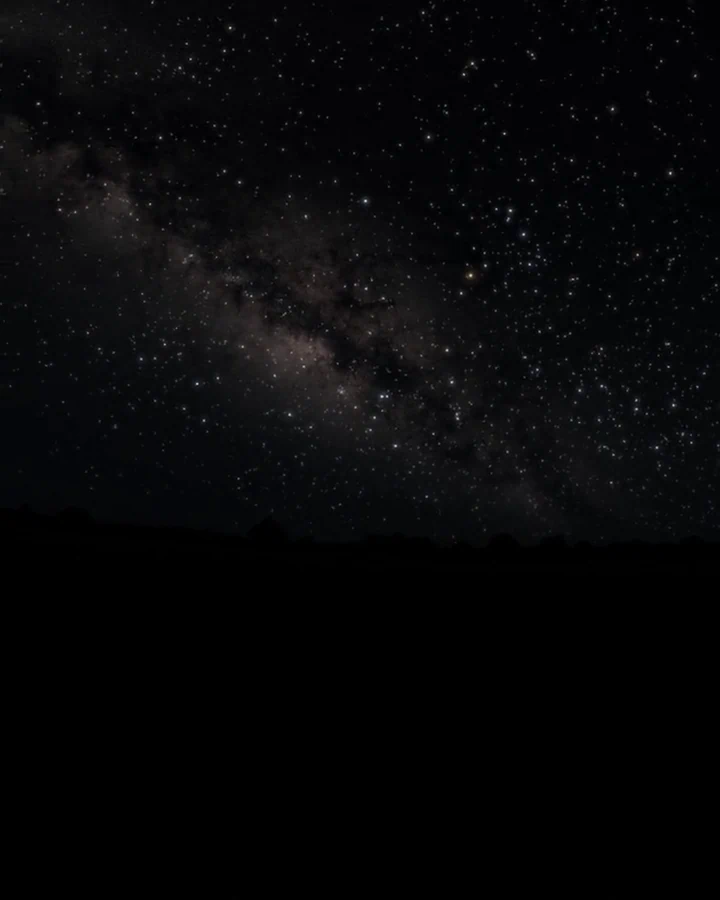
Wollongong · Tonight, Monday 16 November
Tonight's sky over Wollongong
The Sun sets at 19:39 and the sky is fully dark from 21:17 until 04:05. Saturn is up most of the night, then Jupiter, Mars and Venus before dawn. The Moon, a waxing crescent 41% lit, sets at 01:11.
Sunset19:39
Fully dark21:17 to 04:05
Sunrise05:43
ClockWollongong time, AEDT
The night, hour by hour
The sky over Wollongong from sunset to sunrise, on the town's own clock: the band shades from twilight to full dark and back, and each bar is when the Moon or a planet is above the horizon, drawn bright while it can be seen. The dot is the best moment to look.
Planets tonight
Where and when to look for each planet from Wollongong. A planet counts as visible when it is at least 5° up once civil twilight is over; Uranus and Neptune need 10° and a darker sky, and binoculars or a telescope.
-
MercuryNot tonight
Sets at 18:06, before the Sun.
Sets 18:06 · Rises 04:56 · Magnitude −0.2
-
VenusBefore dawn
From 04:34 until dawn. Best around 04:40, 6° up in the east.
Sets 17:09 · Rises 04:06 · Magnitude −4.8
-
MarsBefore dawn
From 02:17 until dawn. Best around 04:40, 29° up in the north-east.
Sets 12:32 · Rises 01:48 · Magnitude 0.7
-
JupiterBefore dawn
From 02:11 until dawn. Best around 04:40, 31° up in the north-east.
Sets 12:34 · Rises 01:43 · Magnitude −2.1
-
SaturnMost of the night
From dusk until 03:22. Best around 21:50, 55° up in the north.
Rises 15:50 · Sets 03:49 · Magnitude 0.6
-
UranusMost of the night
From 21:19 until dawn. Best around 01:20, 35° up in the north. Binoculars show it as a blue-green point; under a dark country sky the eye only just can.
Rises 20:20 · Sets 06:24 · Magnitude 5.7
-
NeptuneMost of the night
From dusk until 02:35. Best around 21:20, 56° up in the north. Too faint for the eye: binoculars on a dark night or a small telescope show it.
Rises 15:20 · Sets 03:27 · Magnitude 7.7
The Moon tonight
Waxing crescent, 41% lit
Sets 01:11 · Rises 11:58. Highest in the dark at 20:10, 59° up in the north-west. The Moon is 7.3 days old.
- First quarterTue 17 Nov, 22:47
- Full MoonWed 25 Nov, 01:53
- Last quarterTue 1 Dec, 17:08
- New MoonWed 9 Dec, 11:51
ISS passes over Wollongong
The International Space Station crosses the sky as a bright, steady point, faster than a plane and without blinking lights. These are its visible passes over Wollongong in the next five days, worked out in your browser from its latest orbit.
Working out the passes from the station's latest orbit…
Get an email before it passes
We email you on the day of each good pass over Wollongong, with the time and where to look. Free, and you can stop it any time.
The station's live position, its orbit and every pass on a 3D Earth are on where is the ISS.
Southern lights from Wollongong
On NOAA's rule of thumb it takes Kp 8.6 (G4) to bring the southern lights low over Wollongong's southern horizon, and even the strongest storm on the scale does not bring it overhead. On NOAA's scale storms that strong come about 60 days per 11-year cycle. The camera on a phone picks up more than the eye.
The live forecast and the best time to look are on the aurora page for this region.
The next two weeks
Each night's sunset, its fully dark hours and the Moon. The last column is the darkness with the Moon down, the time for faint stars and the Milky Way; the best nights are marked.
| Night | Sunset | Fully dark | Moon | Dark, no Moon |
|---|---|---|---|---|
| Tonight | 19:39 | 21:17 to 04:05 | 41% ↓ 01:11 ↑ 11:58 | 2 h 54 min |
| Tue 17 Nov | 19:40 | 21:18 to 04:04 | 51% ↓ 01:39 | 2 h 25 min |
| Wed 18 Nov | 19:41 | 21:20 to 04:03 | 61% ↑ 12:57 ↓ 02:06 | 1 h 57 min |
| Thu 19 Nov | 19:42 | 21:21 to 04:02 | 70% ↑ 13:57 ↓ 02:31 | 1 h 31 min |
| Fri 20 Nov | 19:43 | 21:22 to 04:01 | 79% ↑ 14:58 ↓ 02:58 | 1 h 3 min |
| Sat 21 Nov | 19:44 | 21:24 to 04:01 | 88% ↑ 16:02 ↓ 03:27 | 34 min |
| Sun 22 Nov | 19:45 | 21:25 to 04:00 | 94% ↑ 17:10 ↓ 04:00 | – |
| Mon 23 Nov | 19:46 | 21:26 to 03:59 | 98% ↑ 18:22 ↓ 04:40 | – |
| Tue 24 Nov | 19:47 | 21:28 to 03:58 | 100% ↑ 19:37 ↓ 05:29 | – |
| Wed 25 Nov | 19:48 | 21:29 to 03:58 | 98% ↑ 20:52 ↓ 06:29 | – |
| Thu 26 Nov | 19:49 | 21:30 to 03:57 | 94% ↑ 22:00 ↓ 07:38 | 30 min |
| Fri 27 Nov | 19:50 | 21:31 to 03:57 | 87% ↑ 22:58 ↓ 08:52 | 1 h 27 min |
| Sat 28 Nov | 19:51 | 21:33 to 03:56 | 79% ↑ 23:46 ↓ 10:06 | 2 h 13 min |
| Sun 29 Nov | 19:52 | 21:34 to 03:55 | 68% ↑ 00:24 ↓ 11:17 | 2 h 50 min |
Coming up in Wollongong's sky
The next eclipses, meteor showers and planets at opposition, as they will look from Wollongong. Press Remind me and we email you the day before.
-
Leonid meteor shower peakPeaks Wednesday 18 November 2026, 10:49, with a 55% Moon. The best hours are after midnight on the nights around the peak, away from town lights.
-
Uranus at oppositionOpposite the Sun on Thursday 26 November 2026: up all night, climbing 35° high in the north around midnight.
-
Geminid meteor shower peakPeaks Tuesday 15 December 2026, 00:45, with a 25% Moon. The best hours are after midnight on the nights around the peak, away from town lights.
-
Quadrantid meteor shower peakPeaks Monday 4 January 2027, 14:25, with a 12% Moon. The best hours are after midnight on the nights around the peak, away from town lights.
-
Annular solar eclipseSunday 7 February 2027. Not seen from Wollongong: the Moon's shadow misses it.
-
Jupiter at oppositionOpposite the Sun on Thursday 11 February 2027: up all night, climbing 40° high in the north around midnight.
-
Mars at oppositionOpposite the Sun on Saturday 20 February 2027: up all night, climbing 40° high in the north around midnight.
-
Total solar eclipseMonday 2 August 2027. Not seen from Wollongong: the Moon's shadow misses it.
Every event for the next two years is on the sky events calendar.
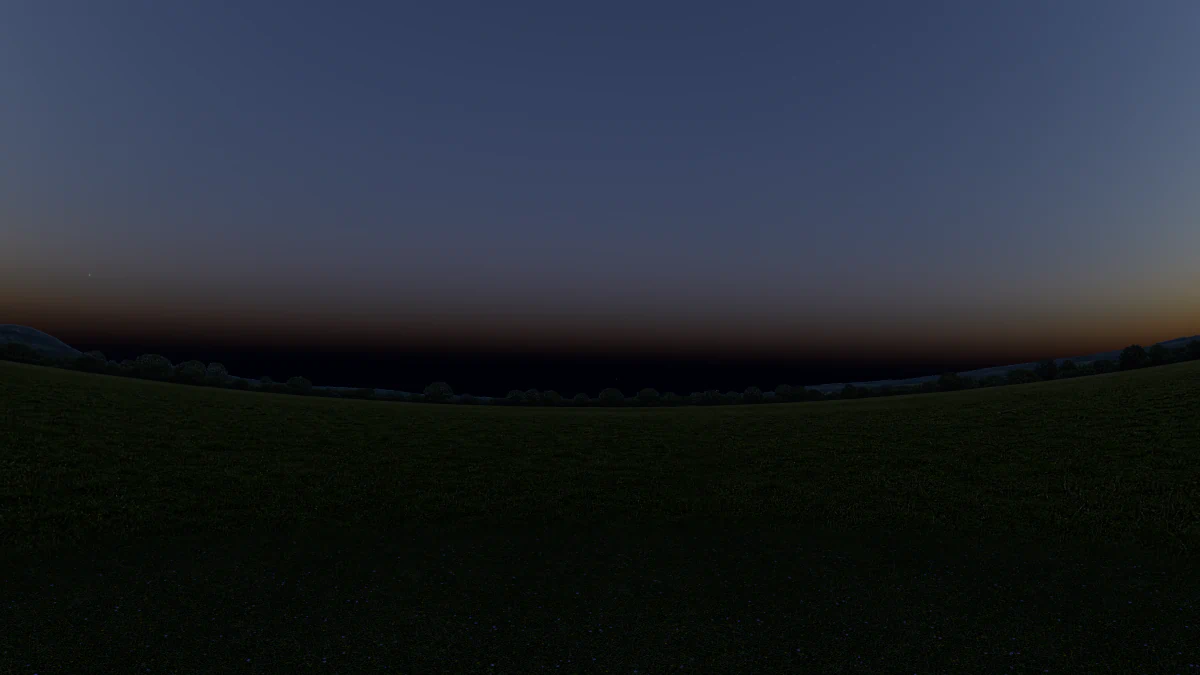
The whole sky over Wollongong, live
Our free planetarium draws the stars, the planets, the Moon and the Milky Way over Wollongong as they are right now, with the constellations named and when everything rises and sets.
Open Wollongong's sky →Keep tonight as a print
Astronomy Pro opens the sky on any other night too, from any place on Earth, and zooms in to the planets' discs and Jupiter's moons. See Astronomy Pro ($3.99 a month or $29.99 a year, 7 days free the first time).
Questions
What time is sunset in Wollongong tonight?
The Sun sets at 19:39 AEDT on Monday 16 November and rises again at 05:43 on Tuesday 17 November. Civil twilight ends at 20:07, when the brightest stars and planets appear.
When does it get dark in Wollongong tonight?
The sky is fully dark, with the Sun 18° below the horizon, from 21:17 until 04:05 AEDT: 6 h 48 min, 2 h 54 min of it with the Moon down. Nautical twilight ends at 20:41.
Which planets can I see from Wollongong tonight?
Venus: From 04:34 until dawn. Best around 04:40, 6° up in the east. Mars: From 02:17 until dawn. Best around 04:40, 29° up in the north-east. Jupiter: From 02:11 until dawn. Best around 04:40, 31° up in the north-east. Saturn: From dusk until 03:22. Best around 21:50, 55° up in the north. Mercury cannot be seen tonight.
What phase is the Moon tonight?
Waxing crescent, 41% lit and 7.3 days old. It sets at 01:11 and rises at 11:58. The next full Moon is on Wednesday 25 November at 01:53 AEDT. Every phase this month is on Moon phase today.
Can I see the southern lights from Wollongong?
On NOAA's rule of thumb it takes Kp 8.6 (G4) to bring the southern lights low over Wollongong's southern horizon, and even the strongest storm on the scale does not bring it overhead. On NOAA's scale storms that strong come about 60 days per 11-year cycle. The camera on a phone picks up more than the eye. The live forecast is on the aurora page for this region.
When can I see the ISS from Wollongong?
The station is only seen when it is in sunlight and your sky is dark, so its passes come in the hour or two after sunset or before sunrise, in runs of a few days a few times a month. The passes listed on this page are worked out in your browser from its latest orbit, and pass alerts by email are free.
What is the best night for stargazing in the next two weeks?
Tonight, with 2 h 54 min of fully dark sky while the Moon is down. The table of the nights ahead has every night with its darkness and its Moon.
Nearby
- SydneyAustralia · 68 km
- NewcastleAustralia · 185 km
- CanberraAustralia · 187 km
- MelbourneAustralia · 652 km
- GeelongAustralia · 717 km
- Gold CoastAustralia · 754 km
Every town is on tonight's sky by town. Which planets are up for anyone on Earth is on planets visible tonight, and the Moon's phase on Moon phase today.
Sources
- Positions of the Sun, the Moon and the planets: VSOP87 (Bretagnon and Francou 1988) and Jean Meeus, Astronomical Algorithms (2nd ed., 1998), chapter 47, run as our planetarium runs them and checked against JPL Horizons
- Rise, set and twilight follow the US Naval Observatory's definitions (the upper limb, 34′ of refraction, the Sun's centre 6°, 12° and 18° down), and the times were checked against the USNO's own tables
- Planet brightness: Mallama and Hilton (2018), Computing apparent planetary magnitudes for The Astronomical Almanac
- The ISS: its orbit from CelesTrak, run through SGP4 in your browser (satellite.js)
- The aurora: NOAA Space Weather Prediction Center, Tips on viewing the aurora, with geomagnetic latitudes from AACGM-v2 (Shepherd 2014) and the Kp forecast from NOAA
- GeoNames: Wollongong, its position and time zone (CC BY 4.0)