Lesson plan · Ages 9 to 14 · 25 minutes
The planets compared
Rocky planets and giant planets, why Venus is hotter than Mercury, and how much you would weigh on Mars.
The lesson
The class compares the eight planets at their true sizes, sorts them into rocky planets and giants, finds out why Venus is hotter than Mercury, and works out what a 50 kg mass weighs on Mars. Pupils then find Jupiter themselves.
What they take away
Mercury, Venus, Earth and Mars are small rocky planets, and Jupiter, Saturn, Uranus and Neptune are giants with no hard surface. Venus is the hottest because its thick atmosphere traps heat, and weight changes from planet to planet because gravity does.
Curriculum links
Quoted word for word from the official documents.
England national curriculum
-
Key stage 2, year 5: Earth and space (notes and guidance, non-statutory)
Read it on gov.ukPupils should learn that the sun is a star at the centre of our solar system and that it has 8 planets: Mercury, Venus, Earth, Mars, Jupiter, Saturn, Uranus and Neptune (Pluto was reclassified as a ‘dwarf planet’ in 2006).
-
Key stage 2, year 5: Forces
Read it on gov.ukexplain that unsupported objects fall towards the Earth because of the force of gravity acting between the Earth and the falling object
-
Key stage 3: Physics, space physics
Read it on gov.ukgravity force, weight = mass x gravitational field strength (g), on Earth g=10 N/kg, different on other planets and stars; gravity forces between Earth and Moon, and between Earth and sun (qualitative only)
Next Generation Science Standards (NGSS)
-
MS-ESS1-3
Read it on nextgenscience.orgAnalyze and interpret data to determine scale properties of objects in the solar system.
Step by step
The caption is what the class reads on screen; the talking points are in your notes drawer (N) when you present. Steps marked Pupils only appear only in the pupil lesson.
-
01
Eight planets
Presented and for pupilsCaption
The Sun has eight planets. Here they are at their true sizes, with the dwarf planet Pluto and the Sun.
Talking points
- NASA: in 2006 the International Astronomical Union agreed a definition of planet that made Pluto a dwarf planet and left eight planets.
- In order from the Sun they are Mercury, Venus, Earth, Mars, Jupiter, Saturn, Uranus and Neptune. This line-up is in order of size, smallest first.
Sources 1 3Present from this step
-
02
Rocky planets
Presented and for pupilsCaption
Mercury, Venus, Earth and Mars are the rocky planets. They have solid surfaces.
Talking points
- NASA: the first four planets from the Sun are known as terrestrial planets because they have solid surfaces. NASA also calls them terrestrial, or rocky, planets.
- Earth is the largest of the four: 12,756 km across, against 12,104 km for Venus, 6,792 km for Mars and 4,879 km for Mercury (NASA).
Ask the class
Which of these are rocky planets? Choose all that are.
More than one answer is right.
- MercuryRight answer
- Jupiter
- MarsRight answer
- Neptune
- VenusRight answer
WhyMercury, Venus, Earth and Mars are the rocky planets. Jupiter and Neptune are giant planets with no hard surface.
Sources 1 2 3Present from this step
-
03
Giant planets
Presented and for pupilsCaption
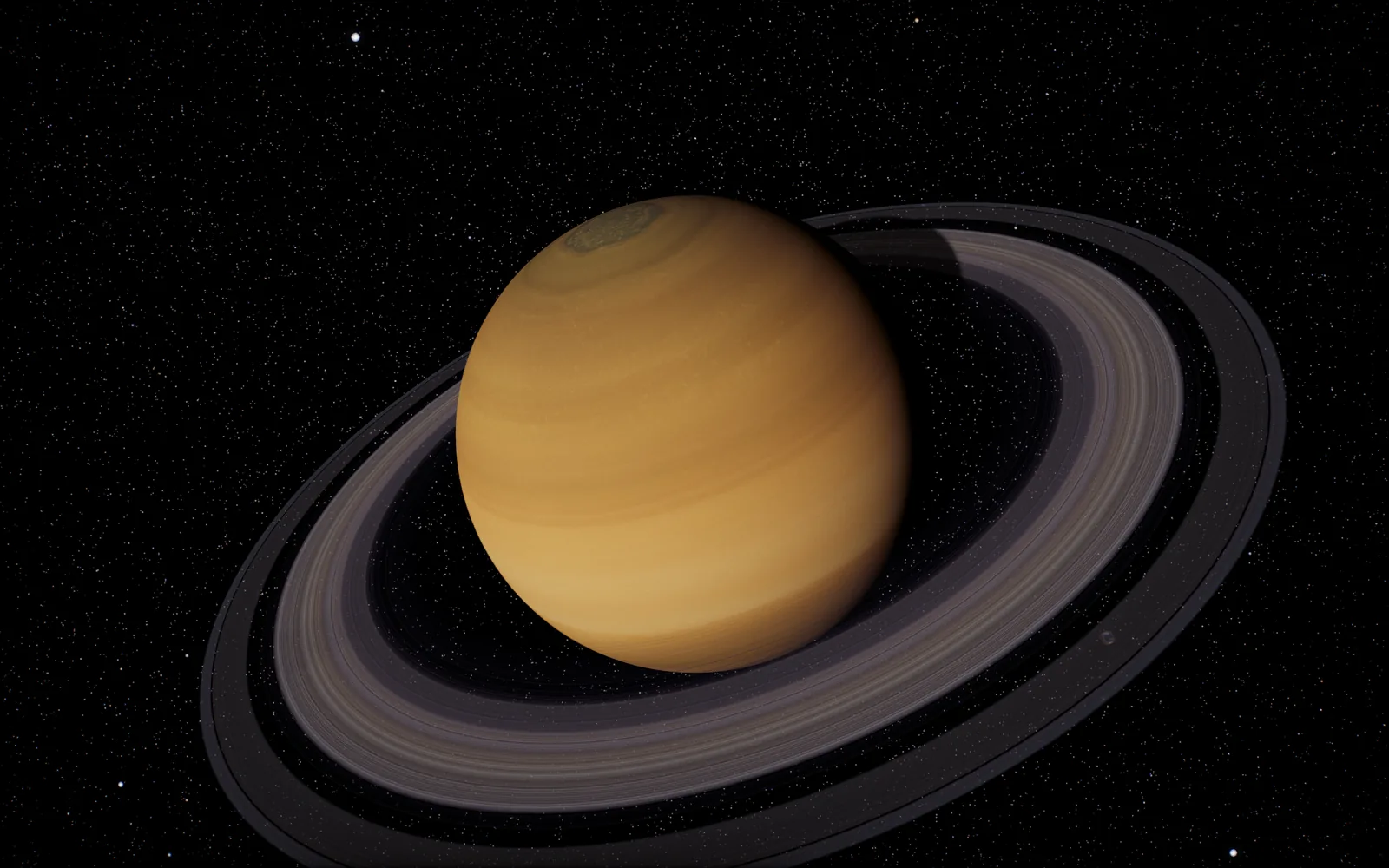
Jupiter and Saturn are gas giants. Uranus and Neptune are ice giants. None of the giants has a hard surface.
Talking points
- NASA: the giant planets in the outer Solar System don't have hard surfaces. Instead, they have swirling gases above a core.
- With no ground to stand on, NASA's fact sheet gives the giants' gravity at the height where the air pressure is 1 bar.
- NASA's fact sheet notes group all four as gas giants. NASA Science calls Uranus and Neptune ice giants.
Sources 1 4Present from this step
-
04
The hottest planet
Presented and for pupilsCaption
Mercury is the closest planet to the Sun, yet Venus is the hottest. Its thick atmosphere traps the heat.
Talking points
- NASA mean temperatures: Mercury 167 °C, Venus 464 °C. Average distances from the Sun: Mercury 57.9 million km, Venus 108.2 million km.
- NASA: Venus's thick atmosphere traps heat in a runaway greenhouse effect. NASA's Venus page puts the surface at about 467 °C, hot enough to melt lead.
- NASA: because Mercury is so close to the Sun, its days can reach 430 °C. Without an atmosphere to keep that heat in at night, its nights can fall to minus 180 °C.
- NASA's mean for Mercury averages the very hot day side and the very cold night side, so it is not the temperature of any one place.
Ask the class
Which planet has the hottest surface?
- Mercury, because it is closest to the Sun
- Venus, because its thick atmosphere traps heatRight answer
- Mars, because it is red
WhyVenus's surface averages 464 °C, hotter even than the 430 °C Mercury reaches in its daytime, because its thick atmosphere traps heat (NASA).
Sources 3 4 6 7Present from this step
-
05
Weight on Mars
Presented and for pupilsCaption
Mars has weaker gravity than Earth, so the same mass weighs less there.
Talking points
- Weight = mass × gravitational field strength (g). The curriculum uses g = 10 N/kg on Earth.
- NASA's Planetary Fact Sheet gives surface gravity at the equator as 9.8 m/s² for Earth and 3.7 m/s² for Mars. One N/kg is the same as one m/s², because a newton is a kilogram metre per second squared (NIST).
- Mars's own fact sheet gives 3.69 m/s² at the equator and 3.73 m/s² as the average. Both round to 3.7.
- NASA Glenn: weight is the gravitational force on an object, its mass times the gravitational acceleration (W = m × g). The 50 kg is the same on both planets, so the weight changes with g.
Ask the class
On Mars, g is about 3.7 N/kg. What does a 50 kg mass weigh on Mars, in newtons?
Answer185 N. Answers from 183 to 187 are marked right.
WhyWeight = 50 kg × 3.7 N/kg = 185 N. On Earth, with g = 9.8 N/kg, the same mass weighs 490 N.
-
06
Smallest to largest
Presented and for pupilsCaption
The giants are far bigger than the rocky planets. Can you put these in order of size?
Talking points
- NASA diameters at the equator: Mercury 4,879 km, Earth 12,756 km, Neptune 49,528 km, Jupiter 142,984 km.
Ask the class
Put these planets in order of size, smallest first.
They start in this order: Earth, Jupiter, Mercury, Neptune.
Answer
- Mercury
- Earth
- Neptune
- Jupiter
WhyMercury is 4,879 km across, Earth 12,756 km, Neptune 49,528 km and Jupiter 142,984 km (NASA).
Sources 3Present from this step
-
07
Find Jupiter
Pupils onlyCaption
Your turn. Find Jupiter, the largest planet, and click it to fly there.
Talking points
- NASA: Jupiter is the fifth planet from the Sun and the largest planet in our Solar System.
Pupil task
Find Jupiter and click on it so the view focuses on it.
HintJupiter is the fifth planet from the Sun, the next one out after Mars. The arrows can also step from planet to planet.
The viewer checks the task as the pupil works and says when it is done.
Sources 1Open this step as a pupil
Sources
Every fact in this lesson comes from these sources, and each step lists the ones it uses.
- Planets, NASA Science
- Terrestrial planets, NASA Science
- Planetary Fact Sheet (metric), NASA NSSDCA
- Notes on the Planetary Fact Sheets, NASA NSSDCA
- Mars Fact Sheet, NASA NSSDCA
- Venus Facts, NASA Science
- Mercury Facts, NASA Science
- NIST Guide to the SI, chapter 4: SI derived units, NIST
- Weight Equation, Beginner's Guide to Aeronautics, NASA Glenn Research Center