Lessons centre · Free
Learn space in 3D.
28 lessons in the live 3D viewer from age 5 to expert, and seven explainers you can turn and test for yourself. Pick a level and start: every lesson runs in your browser, with nothing to install and no account.
How a lesson works
- The view moves for youEach step sets up its own scene in the 3D viewer, with the date, the view and the labels it needs, and a caption about what you are looking at.
- Questions marked as you goAnswers are marked when you check them, and the explanation appears. Written answers are not marked.
- Tasks in the 3D viewSome steps ask you to do something in the viewer itself, such as running the clock to the right moment and pausing it or finding a planet, and check it live while you work.
- Saved as you goYour progress and answers are saved in the browser on that device. On a phone the lesson is a sheet at the bottom of the screen.
Pick your level
The level sets how a lesson reads, how deep it goes and what its questions ask. Each lesson gives its own ages too.
The lessons
28 lessons at seven levels. Every fact in a lesson comes from a source listed in its plan.
No lesson matches that.
First steps
-
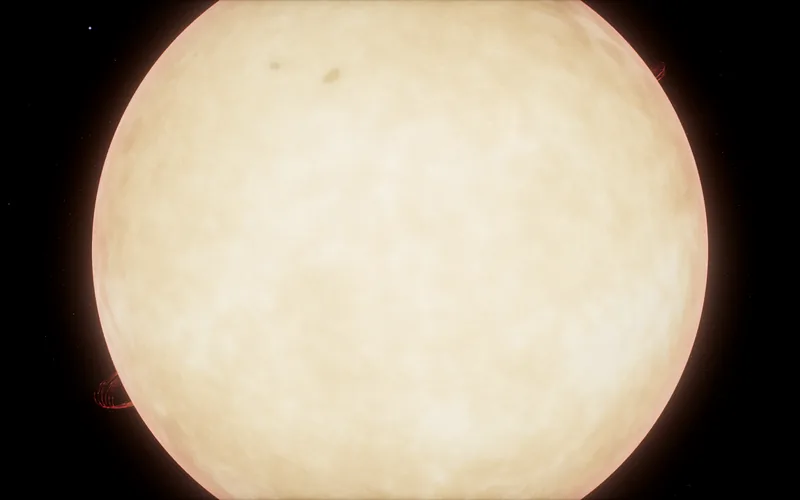
The Sun, the Moon and the stars
The Sun makes its own light and gives us day, the Moon shines with sunlight and is often in the day sky too, and the other stars are always there, though we only see them when our sky is dark.
7 steps · 5 questions · 1 task
-
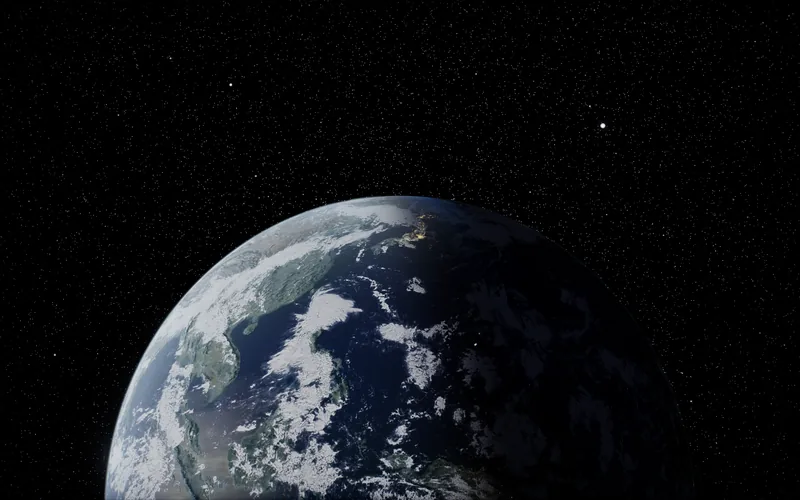
Day and night on a spinning Earth
Earth spins round once a day, so we turn into the Sun's light for day and away from it for night.
7 steps · 4 questions · 1 task
-
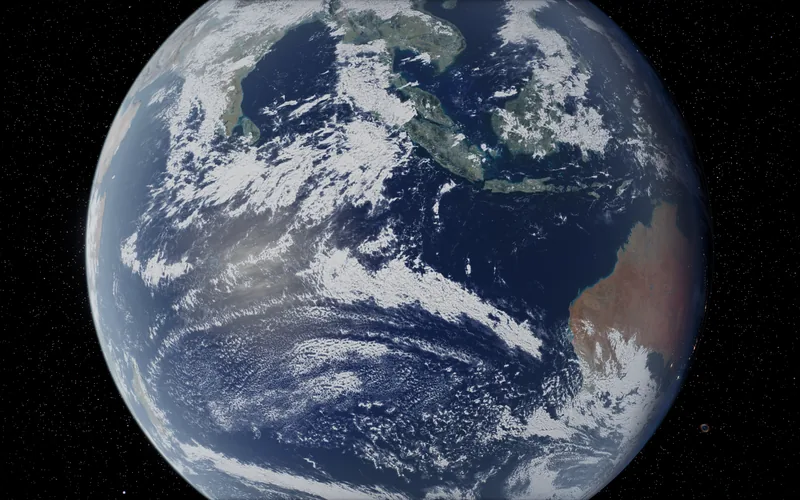
The four seasons
Spring, summer, autumn and winter: in summer the days are long and the Sun climbs high, and in winter the days are short and the Sun stays low.
8 steps · 3 questions · 1 task
Explorers
-
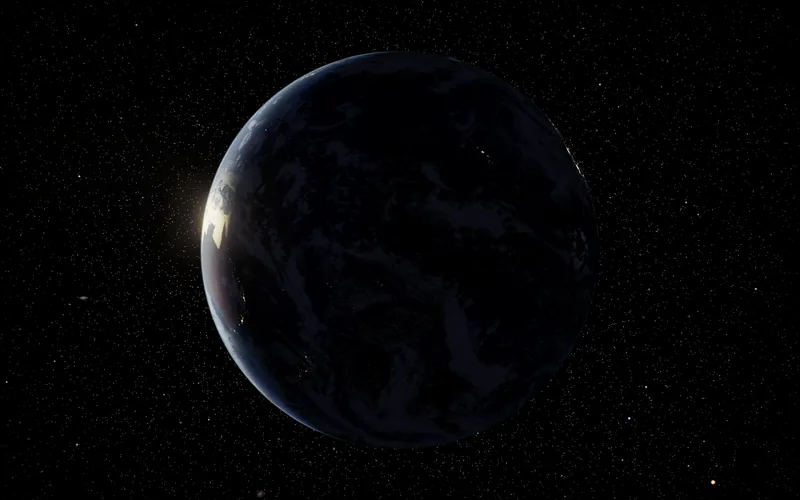
Day and night
Earth spins once a day, so every place turns into the Sun's light and out of it again.
6 steps · 4 questions · 1 task
-
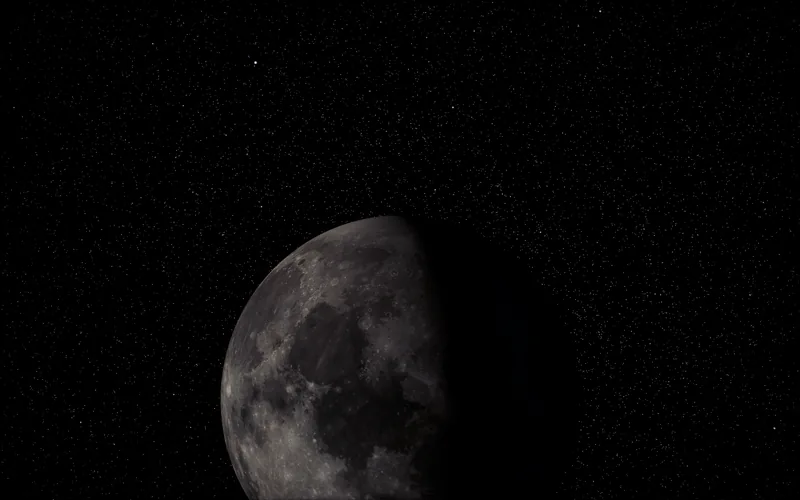
Phases of the Moon
Half of the Moon is always lit by the Sun, and the phase is how much of that half we can see from Earth.
8 steps · 3 questions · 1 task
Investigators
-
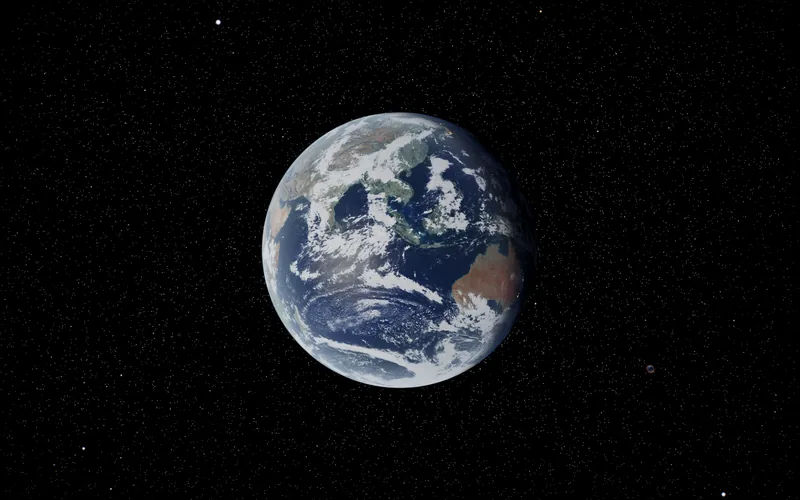
Why we have seasons
Earth's tilted axis gives each hemisphere its summer and winter, and changes how long the days are.
8 steps · 4 questions · 1 task
-
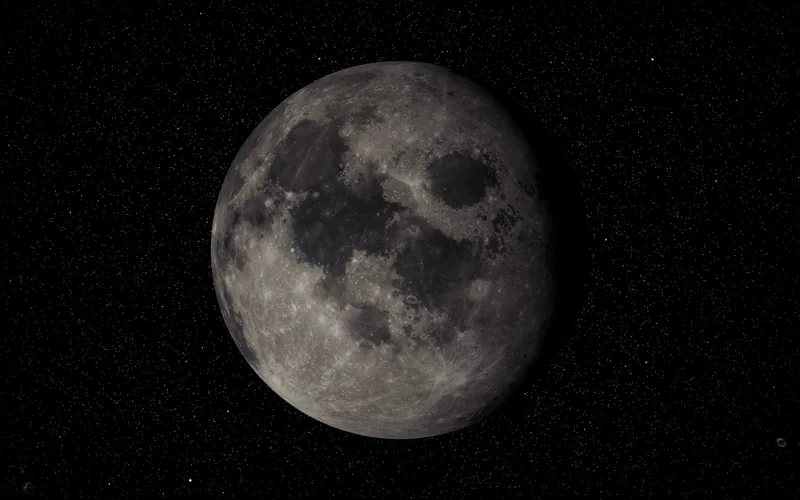
Eclipses of the Sun and Moon
Solar eclipses happen when the Moon's shadow falls on Earth, lunar eclipses when Earth's shadow falls on the Moon, and the tilt of the Moon's orbit means they do not happen every month.
6 steps · 4 questions · 1 task
-
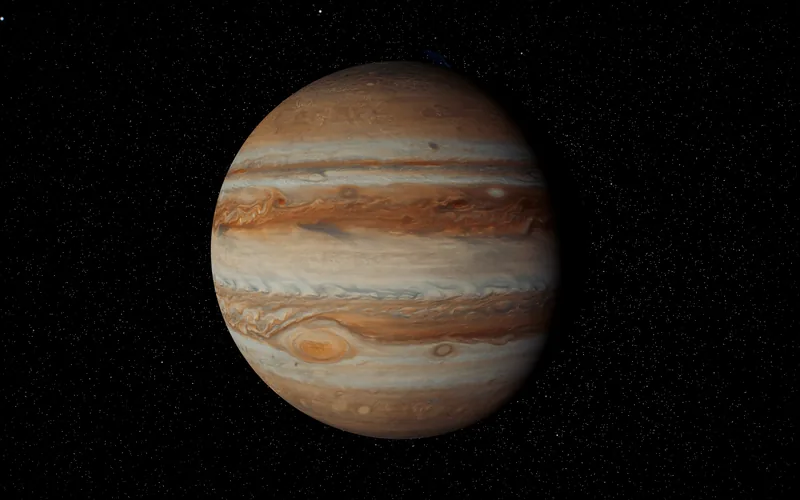
The scale of the Solar System
How big the Sun and planets really are, how far apart they are, and how long sunlight takes to reach us.
7 steps · 4 questions · 1 task
-
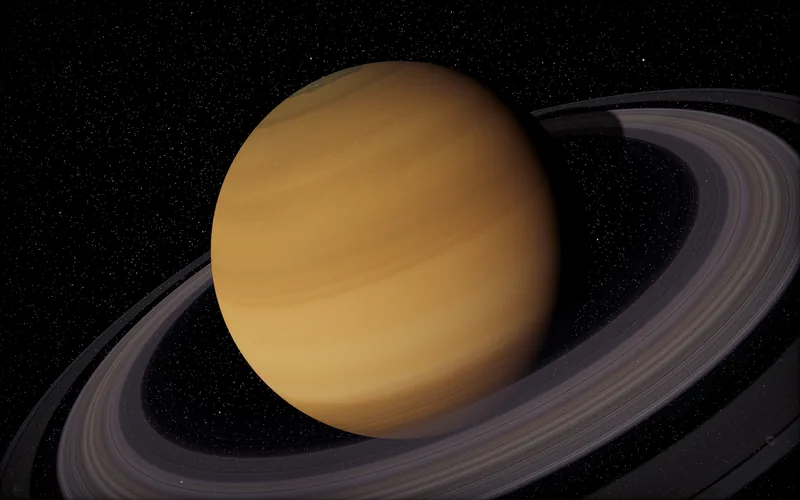
The planets compared
Rocky planets and giant planets, why Venus is hotter than Mercury, and how much you would weigh on Mars.
7 steps · 4 questions · 1 task
GCSE
-
Satellites and orbits
Low Earth orbit and the geostationary ring in the live satellite layer, the ISS's period and speed from its real orbital elements, and why geostationary satellites all sit 35,786 km up.
8 steps · 6 questions · 1 task
-
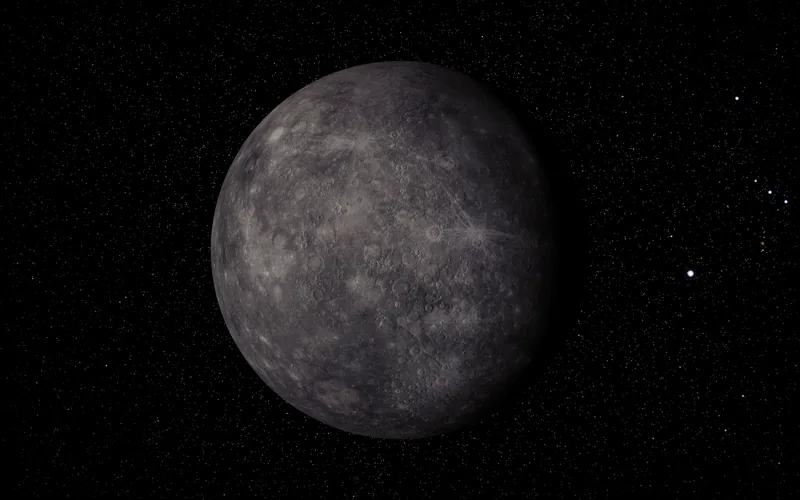
Orbital speed and gravity
Why the inner planets race round the Sun while the outer ones crawl: NASA's orbital speeds, speed from 2πr ÷ T, and Kepler's third law.
9 steps · 6 questions · 1 task
-
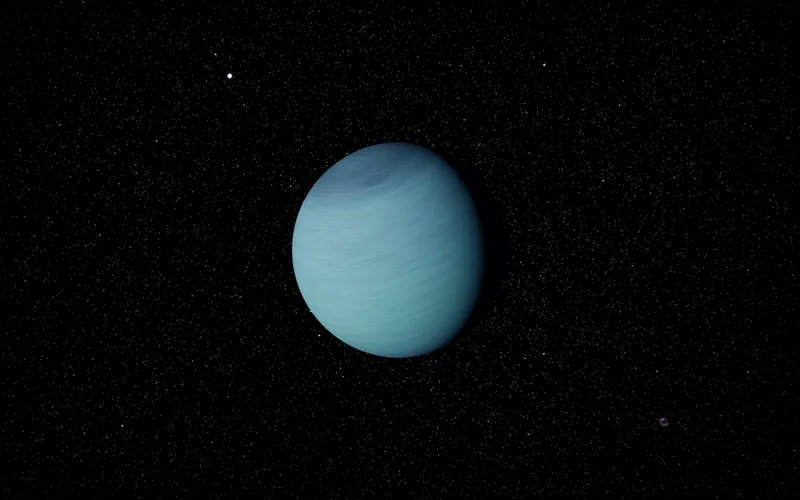
The scale of space and light
How long light takes to reach each planet, why a radio message to Mars takes minutes, what a light year is, and the Milky Way seen from outside.
7 steps · 5 questions · 1 task
-
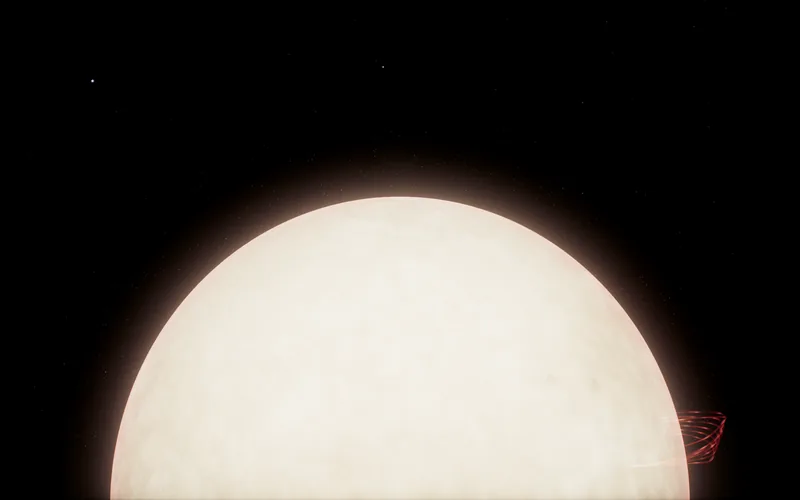
Our star and the planets' energy
Fusion in the Sun's core, the balance that keeps the Sun stable, and how sunlight thins out as 1/r² across the planets.
8 steps · 7 questions · 1 task
-
Earth's magnetic shield
The Earth's field from the compass needle to the magnetopause: the solar wind, a storm pushing the boundary in, the tail past the Moon, the Van Allen belts and the aurora.
9 steps · 8 questions · 1 task
A level
-
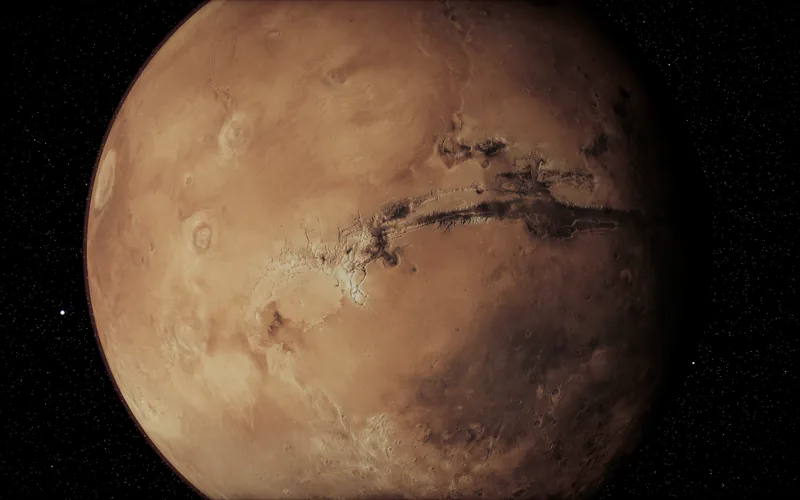
Kepler's third law with real planets
T² ∝ a³ checked against JPL's data for all eight planets, derived from Newton's law of gravitation, and used to find GM and the mass of the Sun.
8 steps · 7 questions · 1 task
-
Gravitational fields and orbits
g = GM/r² and v = √(GM/r) applied to the real ISS, timed in the viewer, and the radius of geostationary orbit derived from the sidereal day.
7 steps · 7 questions · 1 task
-
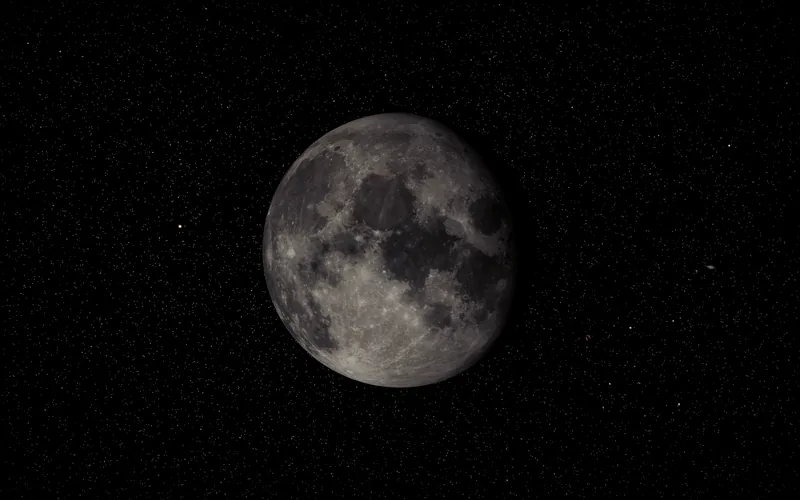
Escape velocity and energy in orbits
Escape speeds for Earth, the Moon, Mars and Jupiter from v = √(2GM/R), the total energy of the ISS in orbit, and what NASA says about why the Moon has so little atmosphere.
8 steps · 7 questions · 1 task
-
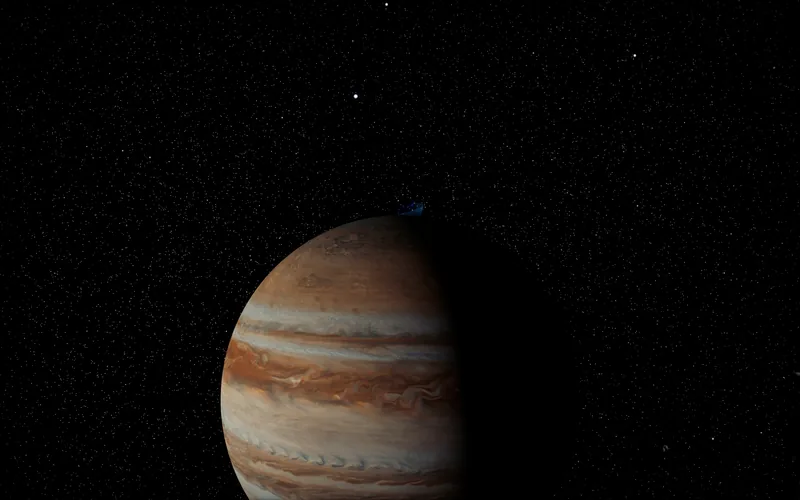
Moons of Jupiter: a laboratory for gravity
Kepler's third law for Io, Europa, Ganymede and Callisto, Jupiter's mass from one moon's orbit, and the 1:2:4 resonance seen at six hours a second.
7 steps · 6 questions · 1 task
-
Why stars have colours
Black-body radiation, Wien's law for the Sun, red Betelgeuse and blue Rigel in Orion, Stefan's law for a star's power and size, and Planck's quanta of 1900.
8 steps · 7 questions · 1 task
-
Fingerprints in sunlight
Electron energy levels, emission and absorption spectra, hf = ΔE for hydrogen's Balmer lines, the dark Fraunhofer lines in sunlight, and helium, found in the Sun before it was found on Earth.
8 steps · 7 questions · 1 task
University
-
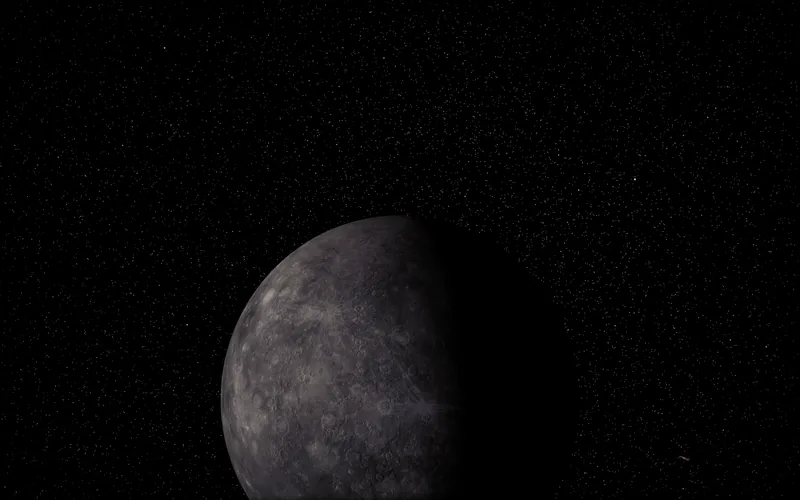
Elliptical orbits and the vis-viva equation
Mercury's perihelion and aphelion fix its ellipse, energy and angular momentum give its speed anywhere on it, and the viewer shows it racing through perihelion at true scale.
7 steps · 6 questions · 1 task
-
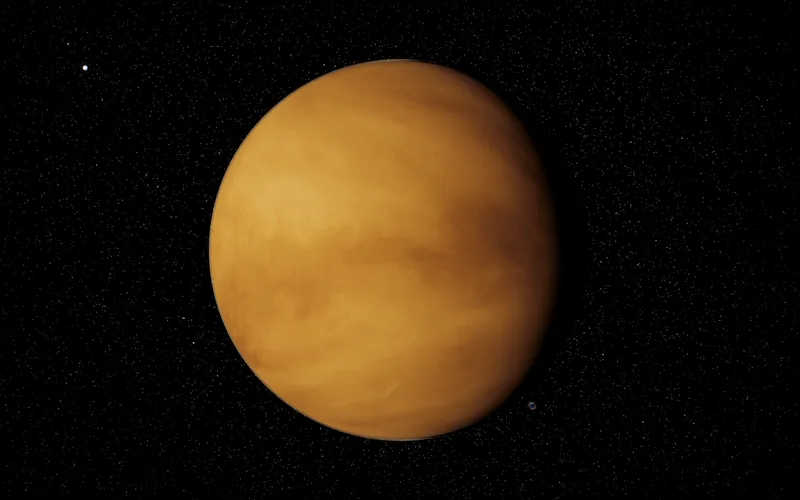
Synodic and sidereal periods
Why new Moon to new Moon takes longer than one orbit, how 1/S = |1/P₁ − 1/P₂| gives the Moon's, Mars's and Venus's synodic periods, and why real lunations and oppositions wander round the mean.
8 steps · 7 questions · 2 tasks
-
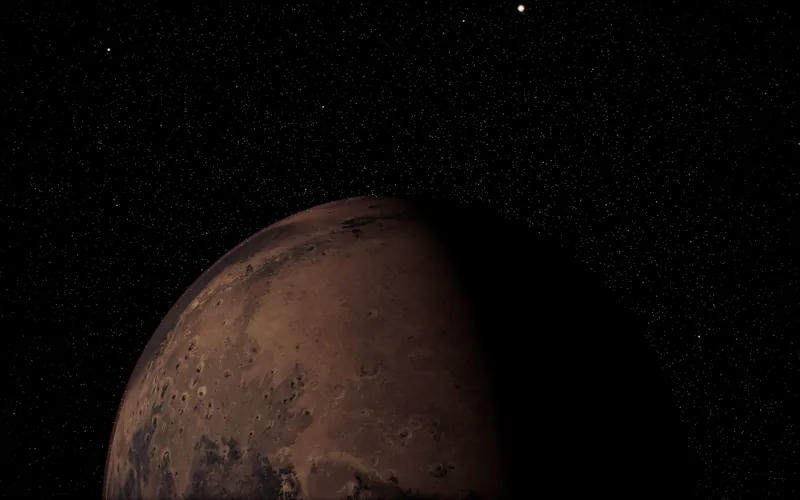
Getting to Mars: Hohmann transfers and launch windows
The minimum-energy transfer from Earth to Mars: its semi-major axis, its 259-day flight, the 2.9 and 2.6 km/s burns at each end, the 44-degree lead Mars needs at launch, and how the real, eccentric orbits move the window.
9 steps · 8 questions · 1 task
-
Eclipse geometry and the Saros
Why an eclipse needs syzygy and a node, how eclipse seasons and the eclipse year follow from the Moon's regressing nodes, and why eclipses repeat after a Saros of 223 lunations, shown with real eclipses from 2009 to 2029.
8 steps · 7 questions · 1 task
Expert
-
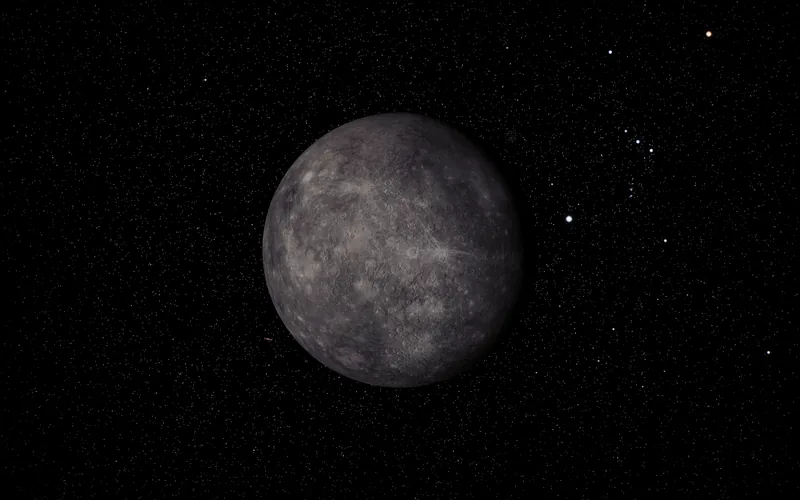
Mercury's perihelion advance
Mercury's perihelion turns about 575 arcseconds a century: the planets account for 532 of them and general relativity for 43, which the lesson derives from the Schwarzschild orbit equation and computes from JPL constants.
8 steps · 7 questions · 1 task
-
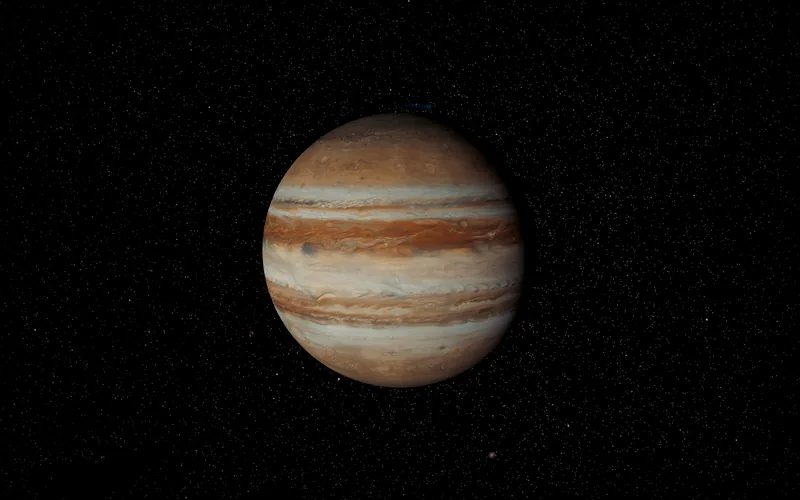
The Laplace resonance
Io, Europa and Ganymede keep n₁ − 3n₂ + 2n₃ = 0 with their Laplace angle librating about 180 degrees: the lesson checks both against NASA periods and JPL mean elements, shows why a triple conjunction is impossible, and measures how sensitive the relation is to rounding the periods.
7 steps · 6 questions · 1 task
-
The equation of time and the analemma
Why a sundial at Greenwich runs up to 16.5 minutes fast and 14.2 minutes slow: the eccentricity and obliquity terms of the equation of time, their sizes, the dates of the extremes in 2027, and solar noon found on the viewer's own globe.
7 steps · 4 questions · 2 tasks
-
Perturbed satellite orbits: J2 and Sun-synchronous orbits
Earth's equatorial bulge turns satellite orbit planes: the lesson derives the nodal rate from Kozai's theory, computes the ISS's 4.95 degrees a day of regression and the 98.19 degree inclination a Sun-synchronous orbit needs at 700 km, and checks both against real element sets from the viewer's live layer.
7 steps · 6 questions · 1 task
Explained in 3D
Longer reads, each built from live 3D scenes you can turn and play with.
-
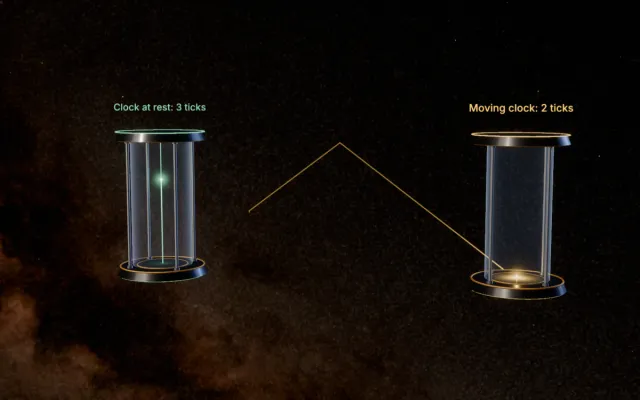
Relativity
A light clock that slows, a ship that shrinks, GPS clocks, Eddington’s bent starlight and Mercury’s orbit.
Open it -
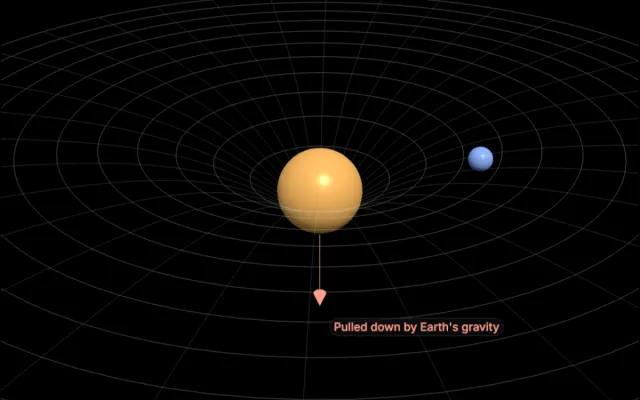
Spacetime
Light cones, the twin paradox, what curved space really looks like, a black hole’s horizon and the waves LIGO caught.
Open it -
Quantum physics
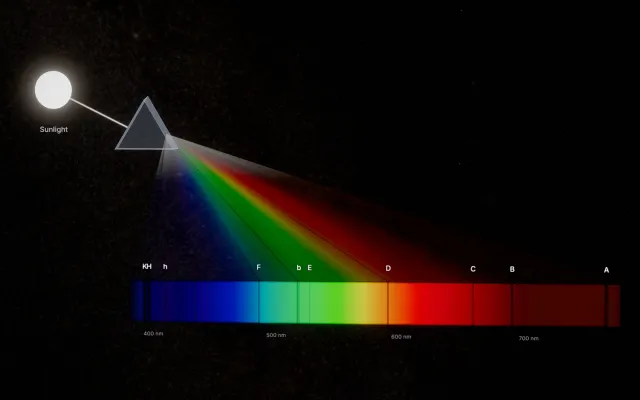
Planck’s glowing stars, hydrogen’s colours, sunlight’s dark lines, the double slit, tunnelling and white dwarfs.
Open it -
Black holes
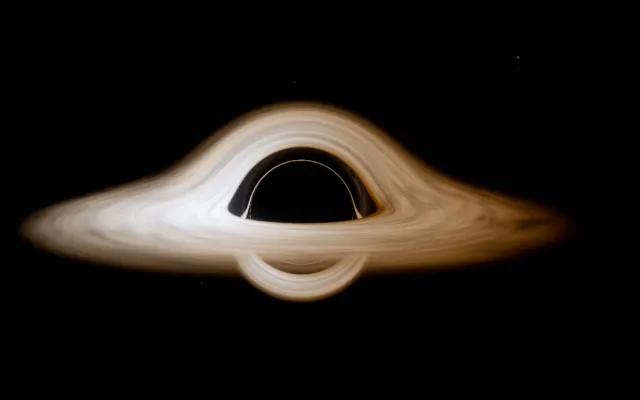
Ray traced from Einstein’s equations: the shadow, the photon ring, the disk bent over the top, a torn star and the EHT picture.
Open it -
Climate and life on Earth
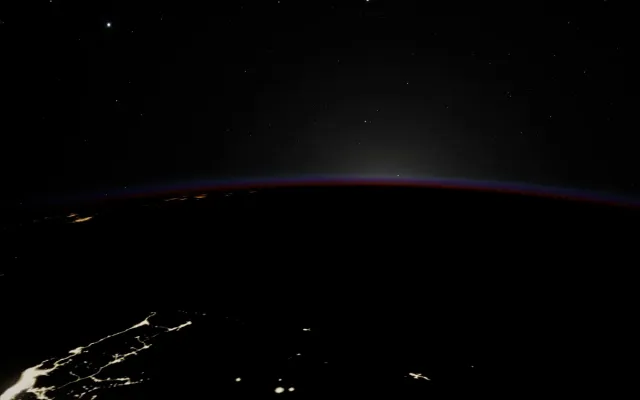
How the thin air keeps the Earth alive, and how we are changing it, painted on the globe with real data.
Open it -
Is the Earth flat?
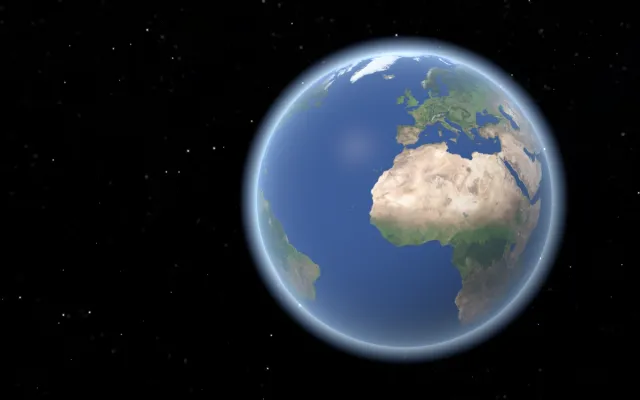
The flat map and the globe side by side in 3D: the Southern Cross, Polaris, ships over the horizon, sunsets and more.
Open it -
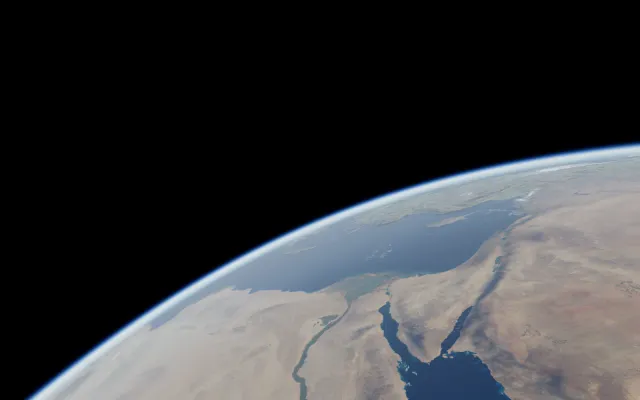
Zoom out to the oldest light
Fly out from the Earth past Saturn, through the Orion Nebula and the Milky Way, across the map of galaxies to the oldest light there is.
Open it
Quick answers
The questions people ask most, each answered on one page.
Kinds of worlds
Teaching a class?
Every lesson here can also be presented on the big screen, with a lesson plan and a pupil sheet to print, and at school levels the curriculum statements it supports. Set lessons to a class to follow each pupil’s progress and answers as they work.