Lesson plan · First steps · Ages 5 to 7 · 15 minutes
The Sun, the Moon and the stars
The Sun makes its own light and gives us day, the Moon shines with sunlight and is often in the day sky too, and the other stars are always there, though we only see them when our sky is dark.
The lesson
The class meets the Sun, the Moon and the stars in the viewer, finds out which of them makes its own light, and sees why the stars come out at night. Pupils then find the Moon themselves.
What they take away
The Sun is a star: it makes its own light, and that light gives us day. The Moon shines with sunlight bouncing off it and is often in the day sky too, and the other stars are there all the time, though we only see them when our sky is dark.
Curriculum links
Quoted word for word from the official documents.
England national curriculum
-
Key stage 1, year 1: Seasonal changes (notes and guidance, non-statutory)
Read it on gov.ukNote: pupils should be warned that it is not safe to look directly at the sun, even when wearing dark glasses.
Next Generation Science Standards (NGSS)
-
1-ESS1-1
Read it on nextgenscience.orgUse observations of the sun, moon, and stars to describe patterns that can be predicted.
Step by step
The caption is what the class reads on screen; the talking points are in your notes drawer (N) when you present. Steps marked Pupils only appear only in the pupil lesson.
-
01
The Sun
Presented and for pupilsCaption
This is the Sun, a star made of hot, glowing gas.
Talking points
- NASA Space Place: a star is a hot, glowing ball of gas, and the light of daytime comes from our closest star, the Sun.
- Safety first: never look straight at the Sun, even with sunglasses on. NASA Space Place says never to look directly at the Sun without very special protective eyewear, and the national curriculum asks that pupils are warned it is not safe even when wearing dark glasses.
Sources 1 6Present from this step
-
02
Daytime
Presented and for pupilsCaption
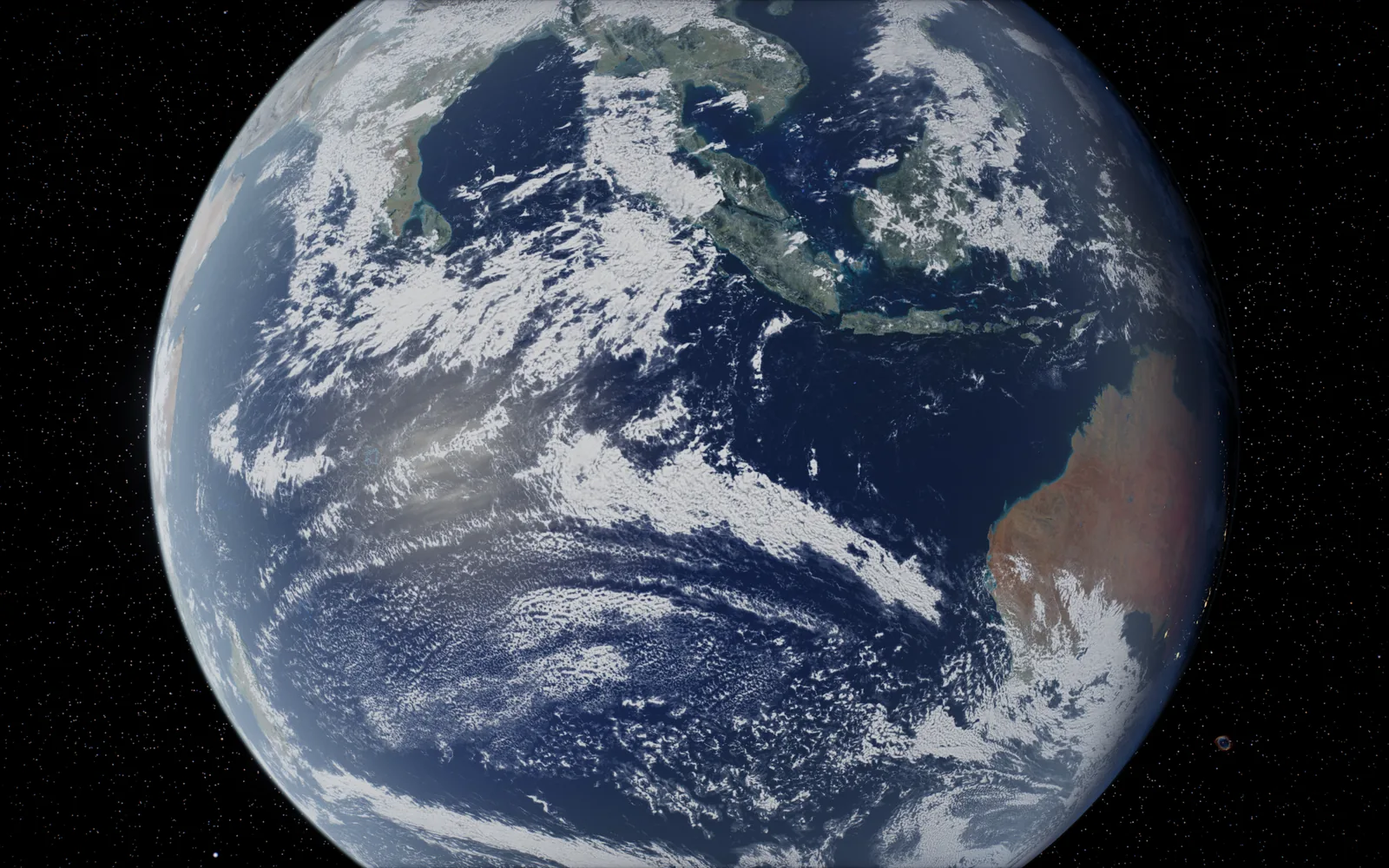
Sunlight lights up one side of Earth, and on that side it is daytime.
Talking points
- NASA: in our whole solar system the only object that shines with its own light is the Sun, and its light lights up half of our planet at a time.
- Ask the class where the Sun must be in this picture. The bright side faces it.
Ask the class
Which side of Earth is having daytime?
- The bright sideRight answer
- The dark side
WhyThe bright side is facing the Sun, so it has daytime. The dark side has night.
Sources 2Present from this step
-
03
The Moon
Presented and for pupilsCaption
The Moon shines because sunlight bounces off it.
Talking points
- NASA: the Moon does not make its own light, and moonlight is really reflected sunlight.
- A NASA scientist puts it this way: unlike our Sun, the Moon does not create its own light, and we can only see it because light from the Sun is reflecting off its surface.
- This view looks at the Moon from the Sun's side, so the half the Sun is lighting faces us.
Ask the class
Which one makes its own light?
- The SunRight answer
- The Moon
WhyThe Sun makes its own light. The Moon shines because the Sun's light bounces off it.
Sources 2 3Present from this step
-
04
The Moon in the day
Presented and for pupilsCaption
The Moon goes round and round Earth, and we can often see it in the daytime sky too.
Talking points
- A NASA scientist: the Moon spends almost as much time in the daytime sky as in the night sky; you just have to look a little harder to see it.
- NASA: a first quarter Moon rises around midday and is high in the sky in the evening, so on those days it is up while it is still light.
- The clock runs at a day a second. NASA gives the Moon's trip round Earth as 27.3 days measured against the stars, so one trip takes about half a minute here.
- This view is not to scale. NASA says the gap between Earth and the Moon could hold about 30 Earths.
Ask the class
Can we sometimes see the Moon in the daytime?
- YesRight answer
- No
WhyYes. The Moon is often up in the daytime sky, and it is bright enough to see even when the sky is light.
Sources 2 3 4Present from this step
-
05
Stars at night
Presented and for pupilsCaption
At night our side of Earth faces away from the Sun, and we can see the stars.
Talking points
- NGSS gives this pattern as an example for first grade: stars other than our Sun are visible at night but not during the day.
- A NASA scientist: the stars are still up there during the day, but we cannot see them because the sky is too bright.
- This is the night side of Earth at midnight in London on 20 March 2027, with the stars behind it.
Ask the class
Are the stars still in the sky in the daytime?
- Yes, but the bright sky hides themRight answer
- No, they go away in the day
WhyThe stars are there all the time. In the day the sky is so bright that we cannot see them.
Sources 3 5Present from this step
-
06
The Sun is a star
Presented and for pupilsCaption
The Sun is the closest star to us, and the other stars are much, much farther away.
Talking points
- NASA Space Place: the Sun is our closest star, way, way closer than the other stars. The next closest star, Proxima Centauri, is about 4 light-years away.
- The Sun and the planets in this view are not to scale.
Ask the class
Which of these make their own light? Choose all that do.
More than one answer is right.
- The SunRight answer
- The Moon
- The other starsRight answer
WhyStars are hot, glowing balls of gas, so the Sun and the other stars make their own light. The Moon shines with light from the Sun.
Sources 1 2Present from this step
-
07
Find the Moon
Pupils onlyCaption
Your turn: find the Moon and click on it.
Talking points
- The Moon is the small ball on the circle round Earth. The circle is the Moon's path, drawn by the orbits overlay.
- This view is not to scale.
Pupil task
Find the Moon near Earth and click on it.
HintFollow the circle round Earth until you find a small round ball. That is the Moon.
The viewer checks the task as the pupil works and says when it is done.
Sources 2Open this step as a pupil
Sources
Every fact in this lesson comes from these sources, and each step lists the ones it uses.
- All About the Sun, NASA Space Place
- Moon Phases, NASA Science
- Why Can You See the Moon During the Day? We Asked a NASA Scientist, episode 19, NASA
- Moon Fact Sheet, NASA NSSDCA
- 1-ESS1-1 Earth's Place in the Universe, Next Generation Science Standards
- National curriculum in England: science programmes of study, Department for Education