Cassini · 15 September 2006, 15:48 UTC
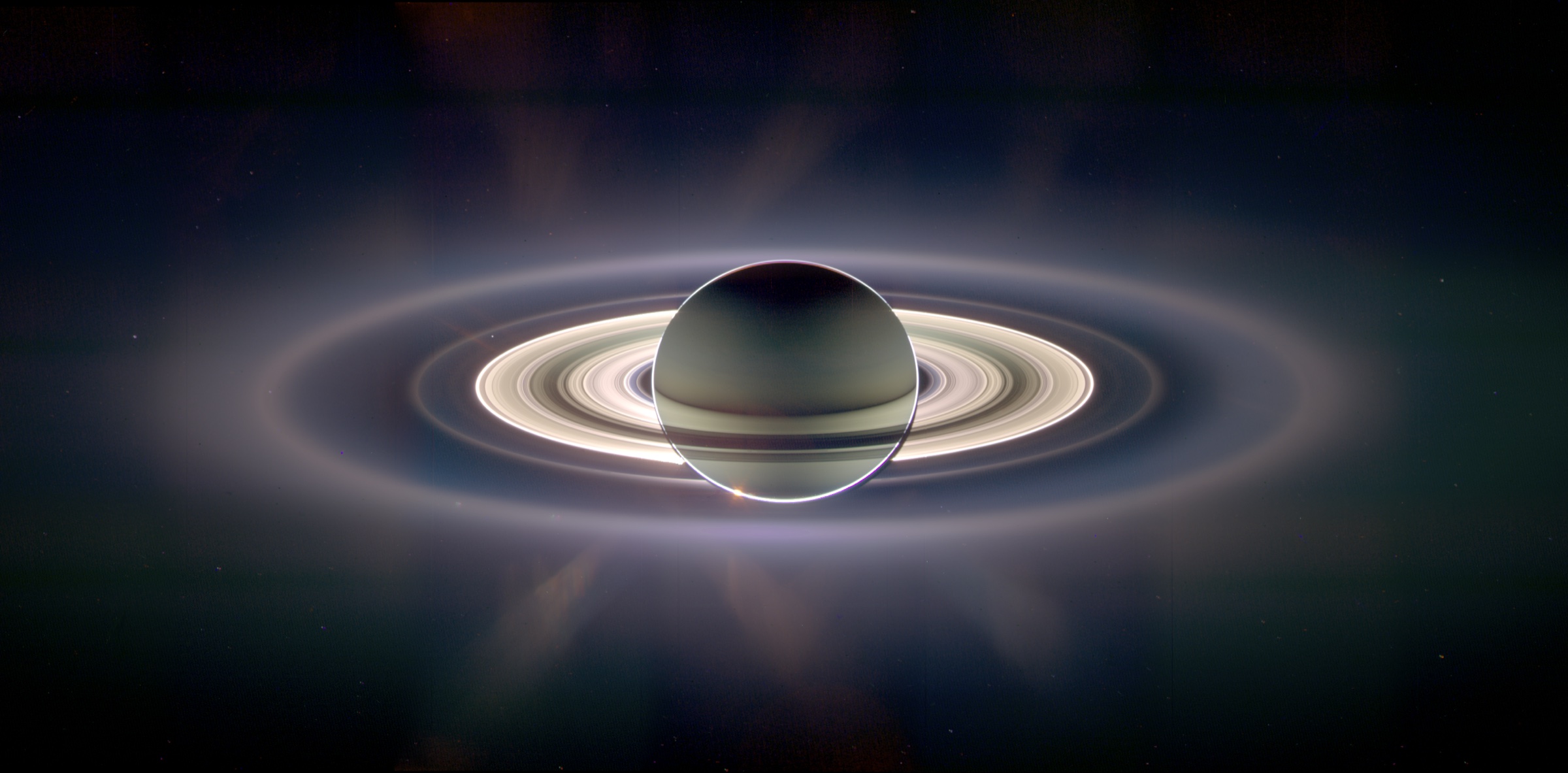
In Saturn's Shadow
For twelve hours Saturn hid the Sun, and Cassini looked at the rings with the Sun almost directly behind them. The faint outer rings glow, and the Earth is the pale dot just inside the G ring.

Slide between them
The original laid over the live view at the same scale, as the viewer does when you press Both or Original. Drag across the picture, or use the arrow keys.
Where it was taken from
Cassini was 2.2 million km from Saturn at 15:48 UTC on 15 September 2006.
The live view puts the viewer's camera right there. The clock goes to that moment, everything switches to true scale, and the camera sits where the spacecraft was, its position from JPL Horizons, NASA's ephemeris service, for that moment [2]. The lens matches the published picture, 9.4° from top to bottom, and the camera is turned to the picture's own orientation, so the original lies over the view at the same scale.
Where the two differ
The original is 165 wide-angle frames over nearly three hours, coloured to resemble natural colour.
Everything in the live view comes from the viewer's own maps and its own light, drawn at one instant. The geometry comes from the spacecraft's position, the lens and the picture's orientation, so where everything was, how big it looked and which way it was lit should all line up with the original.
The facts
- Cassini made this view from 165 wide-angle images taken over nearly three hours on 15 September 2006. [1]
- Saturn hid the Sun for about 12 hours, letting Cassini look at the rings with the Sun almost directly behind them. [1]
- During these observations Cassini found two new faint rings, along the orbits of Janus and Epimetheus and of Pallene. [1]
- The Earth is the pale dot inside the G ring, above the bright main rings, more than a billion kilometres away. [1]
- Cassini was about 2.2 million kilometres from Saturn, looking at the unlit side of the rings from 15 degrees above them. [1]
- Enceladus and its plume sit in the E ring, which the moon's geysers feed. [1]
Open it live
In the viewer the clock runs on from the moment at real pace, so you can watch the scene move the way it did after the shutter closed. Press Both or Original to lay the original over it, or drag to look around from where Cassini was.
Open it live in 3D → All eight as a Mac screensaver
The other seven
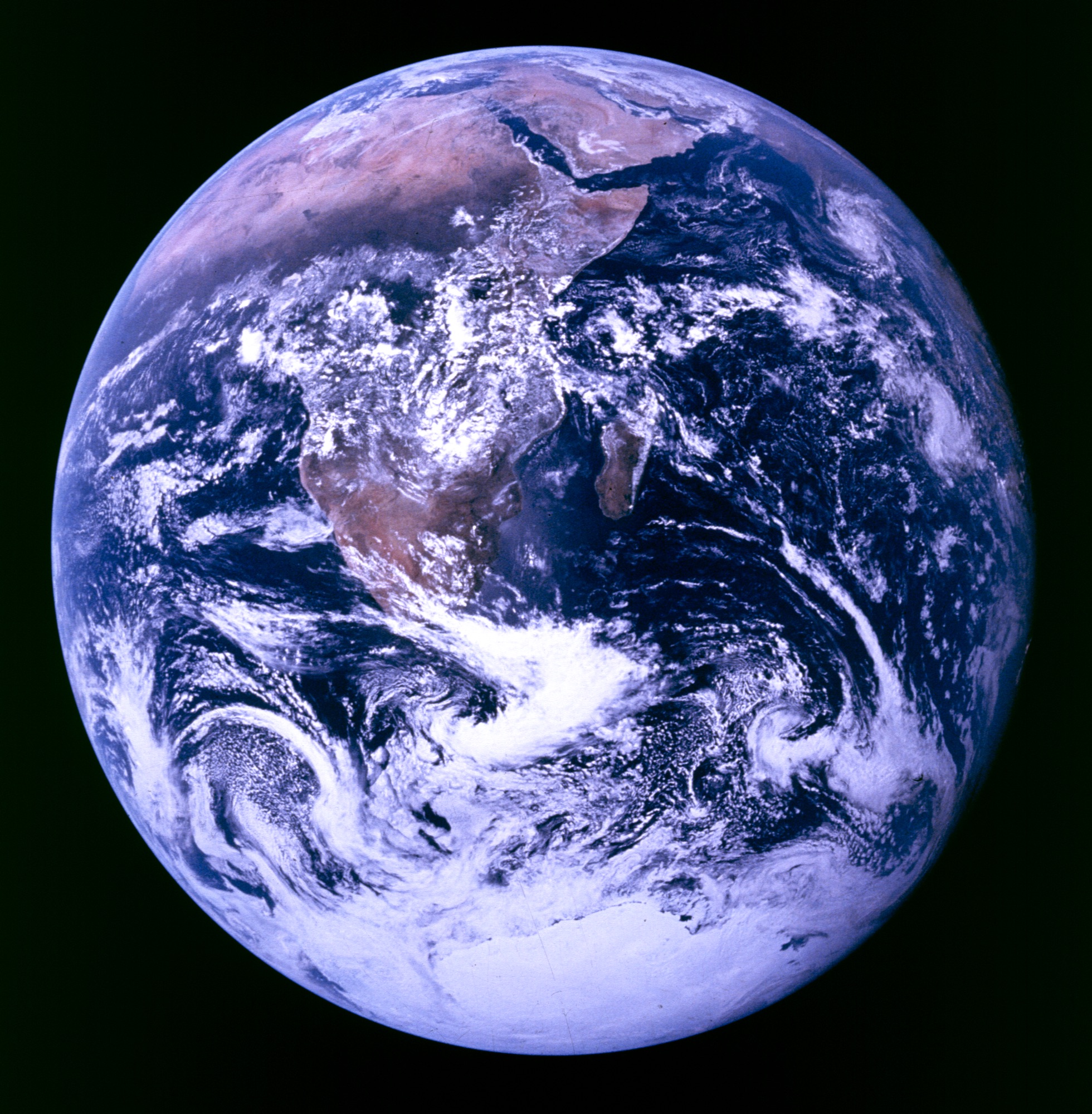
 The Blue Marble
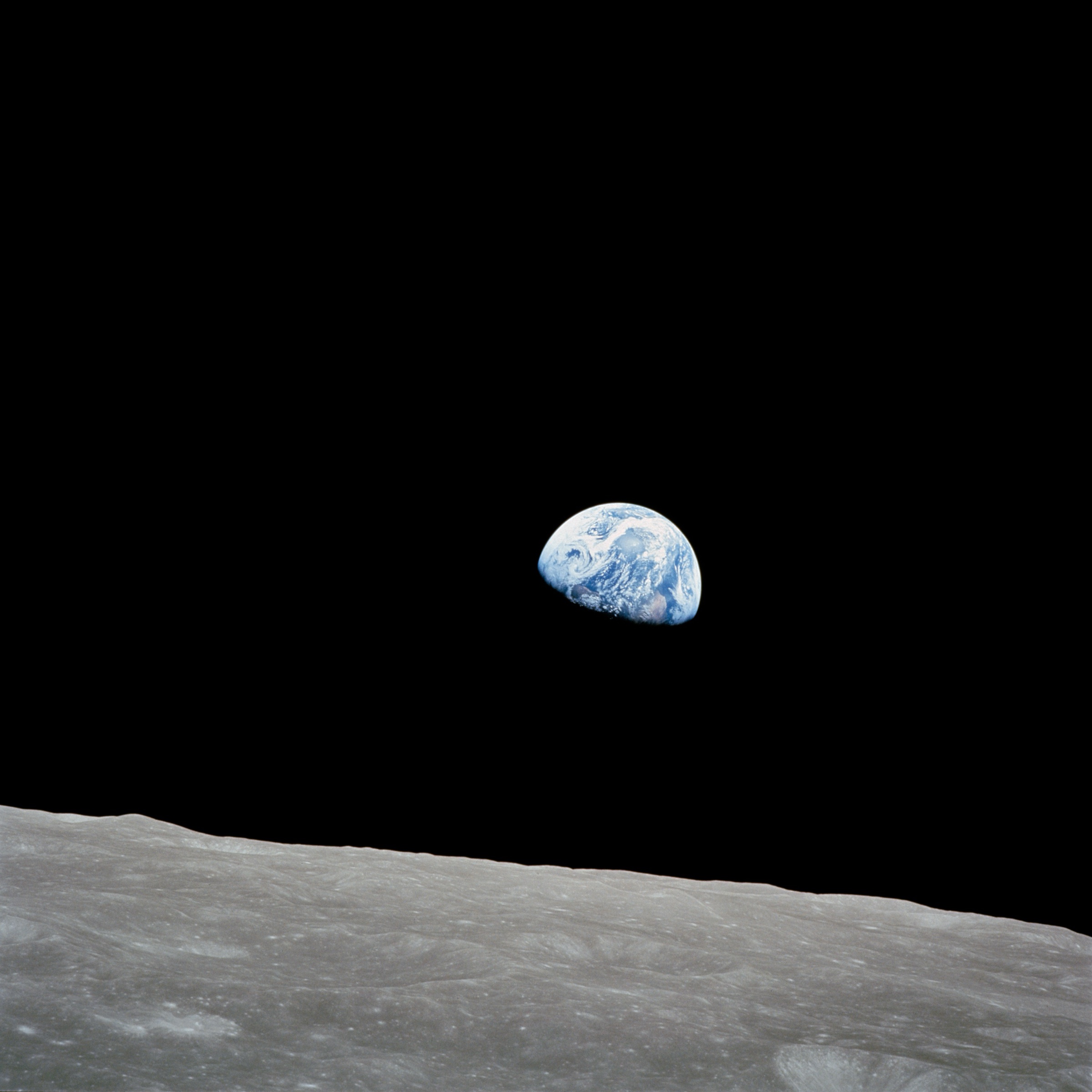
 Earthrise
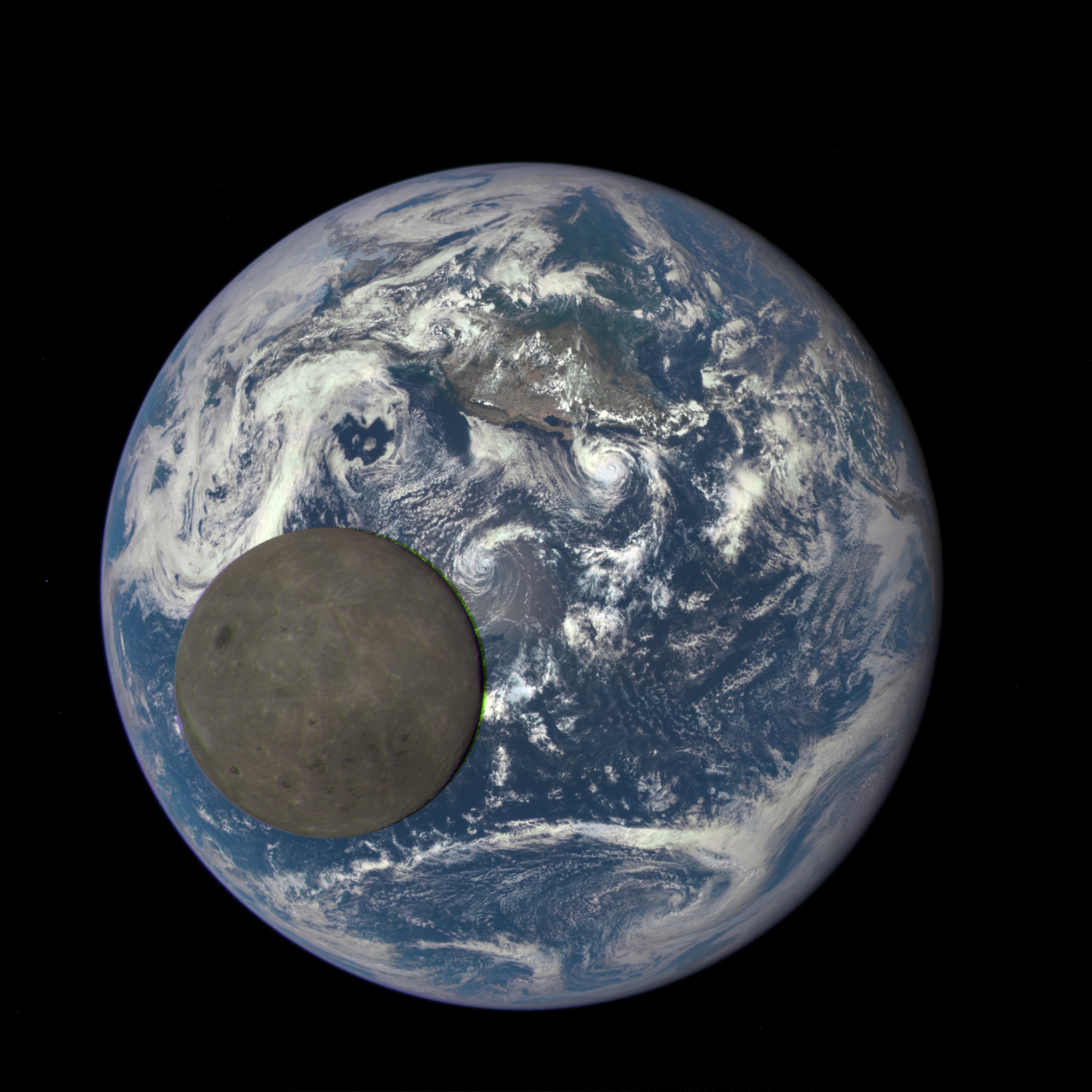
 The Moon crossing the Earth
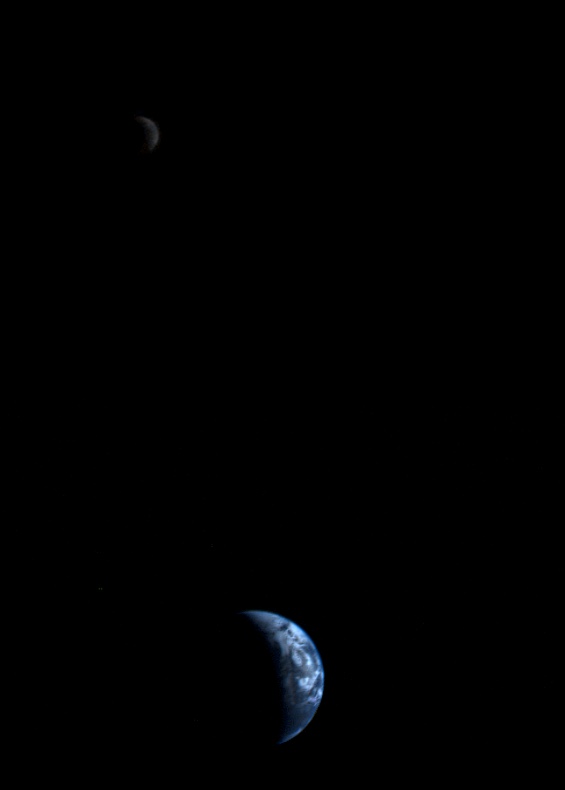
 The Earth and Moon, together
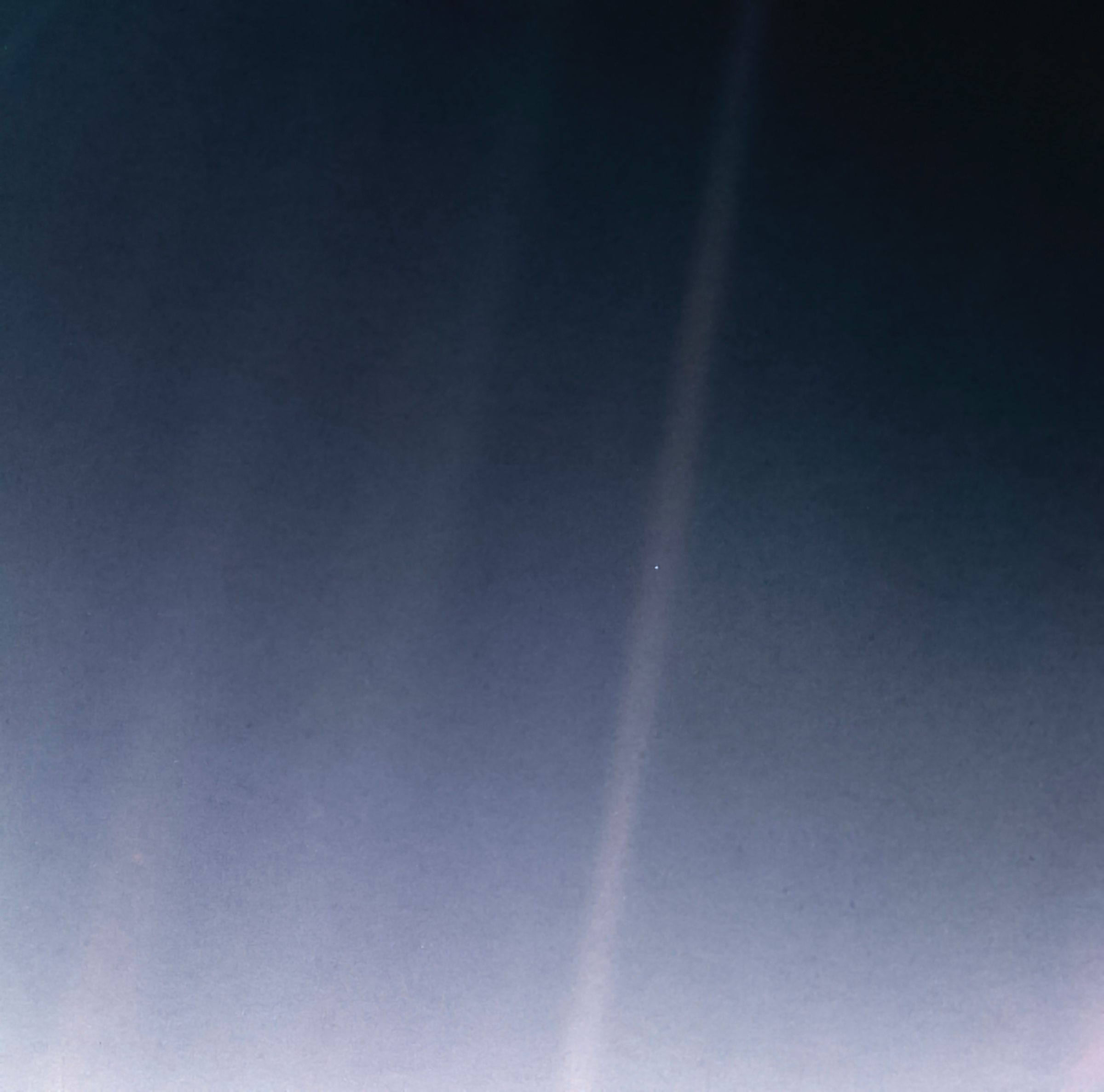
 Pale Blue Dot
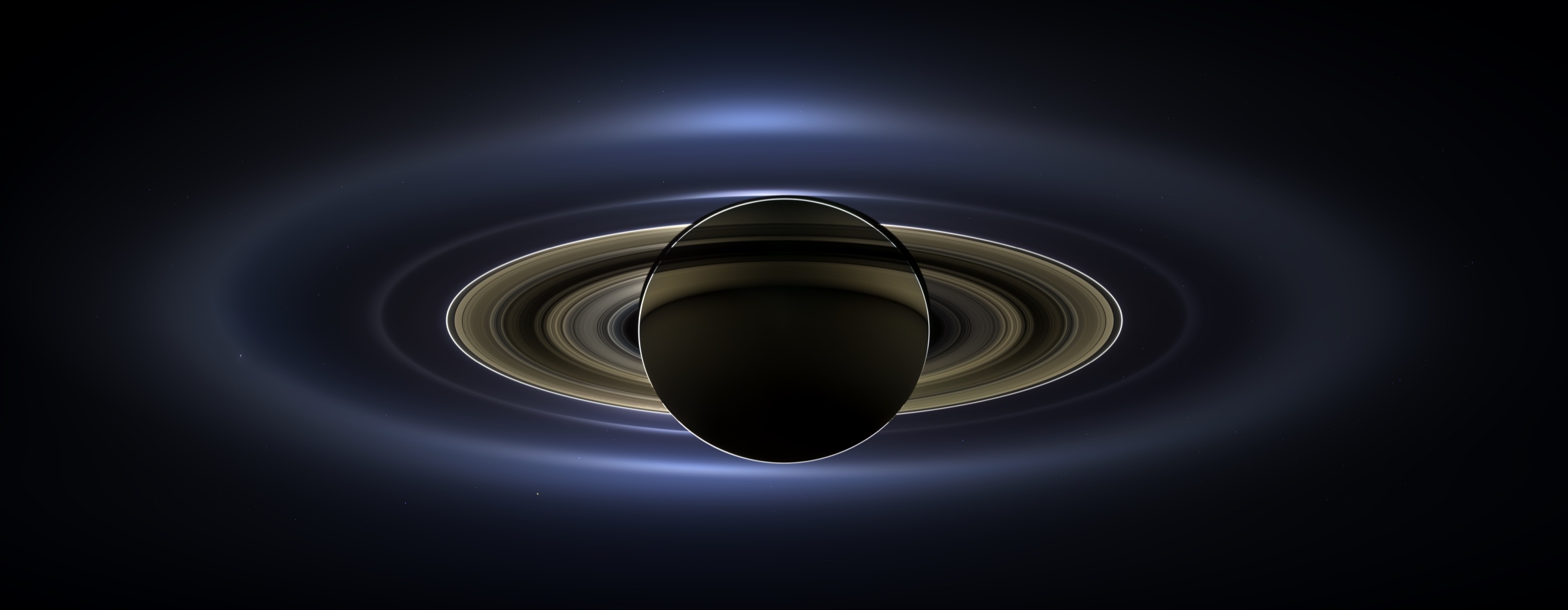
 The Day the Earth Smiled
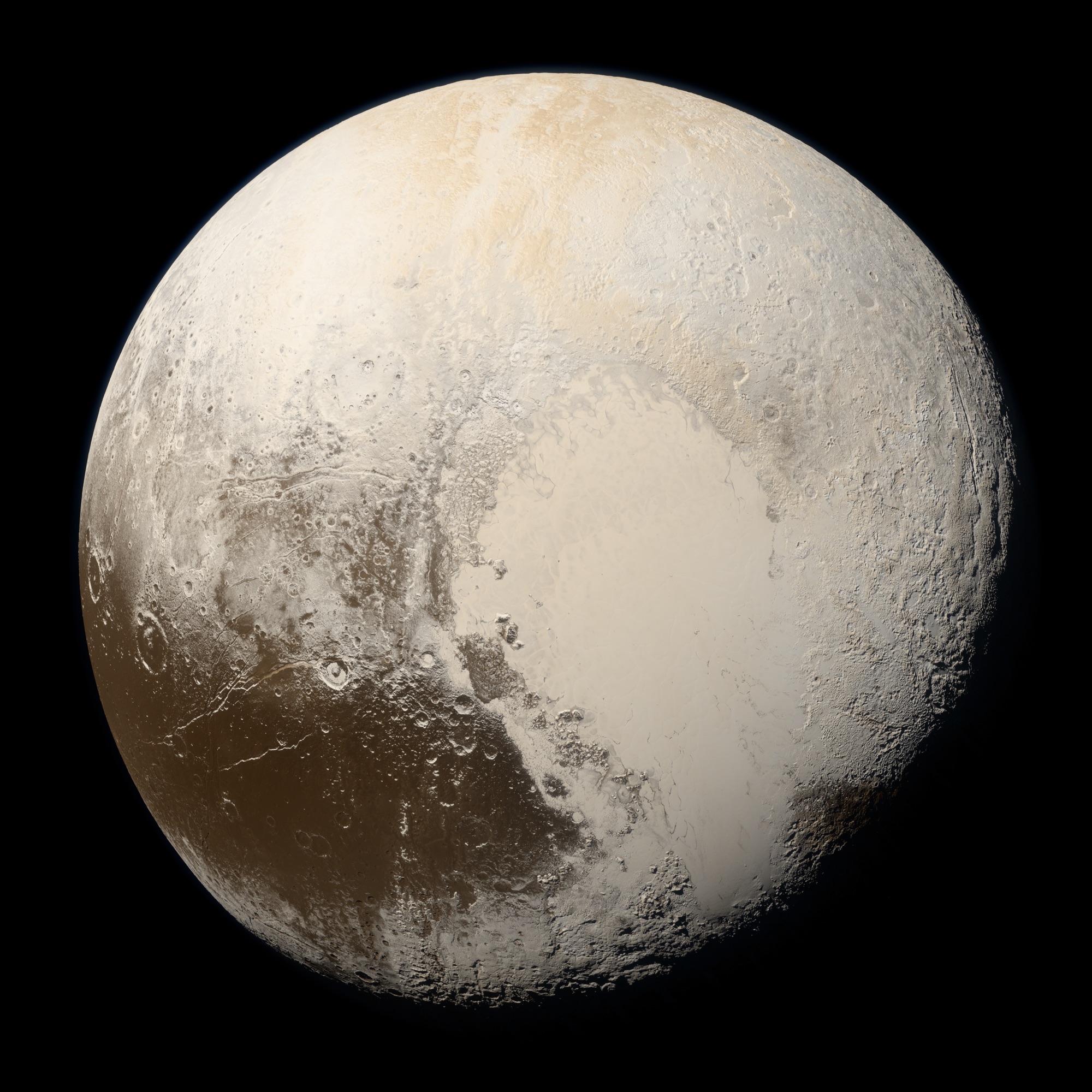
 Pluto in true colour
All the famous photos, and how the views are made
Sources
Original picture: NASA/JPL/Space Science Institute, from NASA Photojournal: In Saturns Shadow. JPL pictures may be used for any purpose without prior permission, with the credit line. JPL image use policy. The live view is ours, rendered by the Our Solar System viewer.